
Montreal is one of the most linguistically and culturally diverse cities in North America, home to people from more than 120 countries who speak over 200 languages. Walk through any neighborhood and you’ll hear French, English, Arabic, Spanish, Mandarin, and Creole in the span of a single block. This isn’t just demographic data on a page. It’s the soundtrack to daily life here, shaping everything from the kind of brunch you can find on a Sunday morning to how businesses recruit talent and how neighbors actually talk to each other.
What makes diversity in Montreal different from other major cities is the interplay between its bilingual foundation and waves of immigration that have accelerated over the past two decades. The city’s French-first language laws mean newcomers navigate a linguistic landscape that’s more complex than Toronto or Vancouver, but that same framework has created tight-knit cultural enclaves where communities thrive. You’ll find Haitian bakeries in Montréal-Nord, Vietnamese pho joints in Côte-des-Neiges, and Portuguese cafés in the Plateau, each rooted in decades of community building.
For anyone living, working, or visiting here in 2026, understanding how this diversity actually plays out matters. It affects where you choose to live, how inclusive your workplace is, and which festivals fill your calendar. Montreal’s multiculturalism isn’t a marketing slogan. It’s visible in hiring practices shaped by Charter protections, in the languages you’ll need to get by, and in the neighborhoods where affordability and cultural identity intersect.
This guide unpacks the real story: the numbers behind the mix, the policies that protect (and sometimes complicate) inclusion, and the lived experience of a city where diversity is both celebrated and still evolving.
Montreal’s Cultural Mosaic: By the Numbers
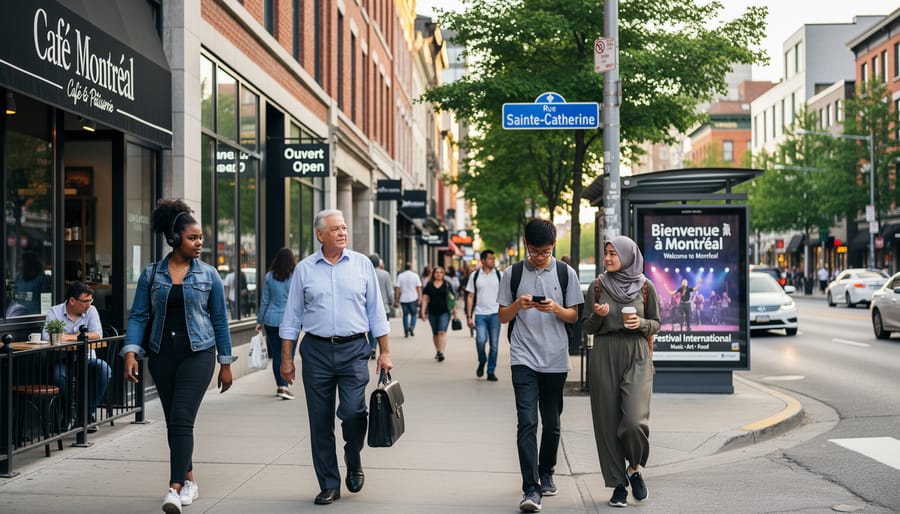
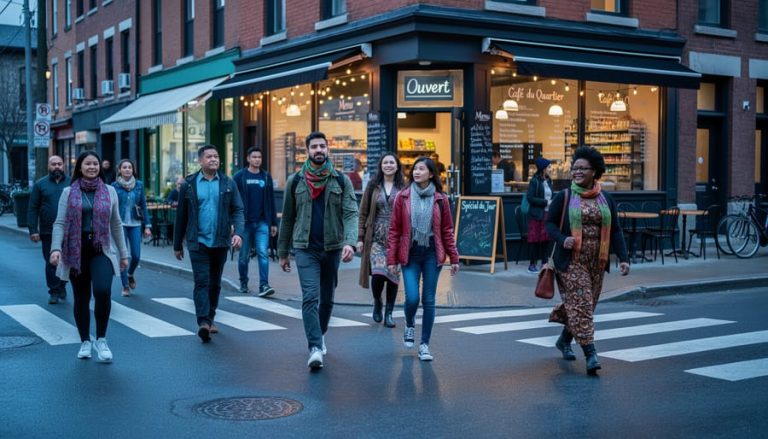
Montreal’s numbers tell a story that’s visible on every street corner. As of 2026, roughly one in three Montrealers was born outside Canada, representing over 200 countries of origin. That immigrant makeup isn’t just a statistic, it’s the reason you hear a dozen languages on the metro between Berri-UQAM and Snowdon, why corner stores stock everything from harissa to hoisin sauce, and why festival banners downtown appear in five scripts at once.
Beyond French and English, the city speaks dozens of mother tongues in significant numbers:
- Arabic: spoken by over 100,000 residents, concentrated in boroughs like Saint-Laurent and Côte-des-Neiges
- Spanish: the language of home for tens of thousands from Latin America, heard widely in Parc-Extension and Villeray
- Mandarin and Cantonese: thriving in traditional Chinatown and growing suburbs like Brossard
- Italian: still strong in neighborhoods like Saint-Léonard and Rosemont, though younger generations are shifting
- Creole, Tagalog, Bengali, and Vietnamese: each with thousands of speakers shaping their own cultural pockets
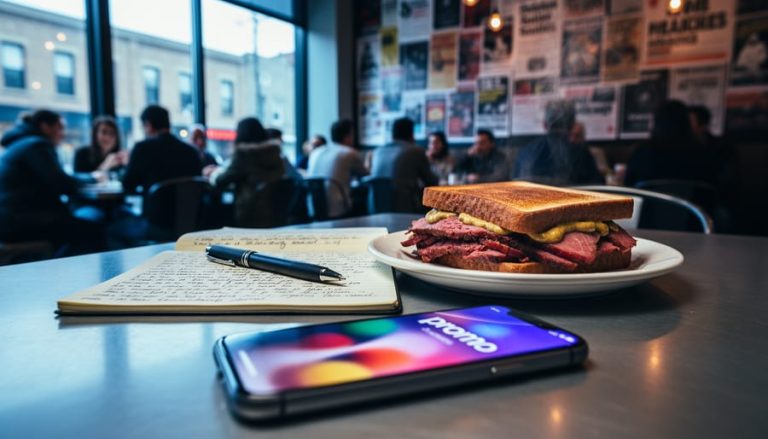
Walk through Côte-des-Neiges and you’ll see this diversity in action, Filipino bakeries next to West African hair salons, kosher markets sharing blocks with halal butchers. Parc-Extension pulses with South Asian grocery shops, Greek tavernas, and Bengali sweet shops, all coexisting in a dense, vibrant corridor. The Plateau leans more francophone and anglophone, but even there you’ll find Vietnamese bánh mì joints, Portuguese churrasqueiras, and Jewish delis that’ve been feeding the neighborhood for generations.
This isn’t window dressing. Street signs in certain areas acknowledge multiple communities, festivals like Nuit Blanche or the Just for Laughs lineup reflect global influences, and the city’s restaurant scene, covered more deeply ahead, is a direct expression of who actually lives here. Montreal’s diversity isn’t a talking point; it’s the texture of daily life.
Equal Opportunity in Montreal Workplaces: What’s Changing

Montreal’s workplace culture is shifting, and companies are starting to catch up to the city’s multicultural reality. Tech startups in Griffintown now run blind resume reviews to strip identifying details before screening candidates. Restaurant groups hiring for front-of-house roles increasingly post bilingual job ads with commitments to consider applicants from all backgrounds. The Quebec Charter prohibits discrimination based on race, ethnicity, language, religion, and origin, but enforcement depends on workers knowing their rights and reporting violations.
Pay equity audits are gaining traction. Since 2026, medium and large employers must track compensation disparities across gender and racialized groups, spurred by pressure from advocacy organizations and updated provincial labour standards. Some tech firms publish annual diversity reports showing hiring percentages by demographic, a transparency measure rare even five years ago. Smaller businesses lag behind, but momentum is building.
Then there’s the linguistic tightrope. Workplace language obligations under Bill 96 mandate French as the language of work for companies with 25 or more employees, requiring contracts, internal communications, and even training materials in French. This complicates hiring for bilingual or multilingual roles, especially in industries like tech and hospitality where English, Mandarin, or Arabic speakers add value. Some employers navigate this by offering robust French training programs alongside multicultural hiring pushes. Others struggle to balance compliance with the practical need for diverse language skills, and that tension shows up in job postings that waffle between “French required” and “French an asset.”
Job seekers should ask direct questions in interviews: Does the company track diversity metrics? What’s the breakdown of leadership by background? How are language requirements applied in practice? Freelancers and digital nomads working with Montreal clients face fewer formal restrictions but should still clarify communication expectations upfront. The workplace is evolving, but change is uneven, know what to look for and don’t settle for performative promises.
How Diversity Defines Montreal’s Food Scene
Neighborhoods to Explore for Authentic Eats
Parc-Extension sits at the heart of Montreal’s South Asian community, where sari shops share storefronts with Greek tavernas. Hit Bombay Mahal on Jean-Talon for dosa that rivals anything in Chennai, then cross the street for spanakopita still warm from the oven. The neighborhood’s magic is in its layering, three generations of immigration creating a food map that doesn’t exist anywhere else.
Côte-des-Neiges delivers West African and Filipino flavors you won’t find downtown. Marché Andes stocks ingredients for Congolese fufu and Ghanaian jollof, while Kanto by Tita’s serves lumpia and adobo that tastes like a Manila kitchen. The stretch along Côte-des-Neiges Road between Queen Mary and Jean-Brillant is where you want to wander hungry.
Chinatown is evolving beyond its tourist-trap reputation. Look past the arches and you’ll find bakeries making fresh char siu bao at dawn, bubble tea shops run by second-generation owners experimenting with ube and pandan, and Vietnamese restaurants where the pho broth has been simmering since 5 a.m.
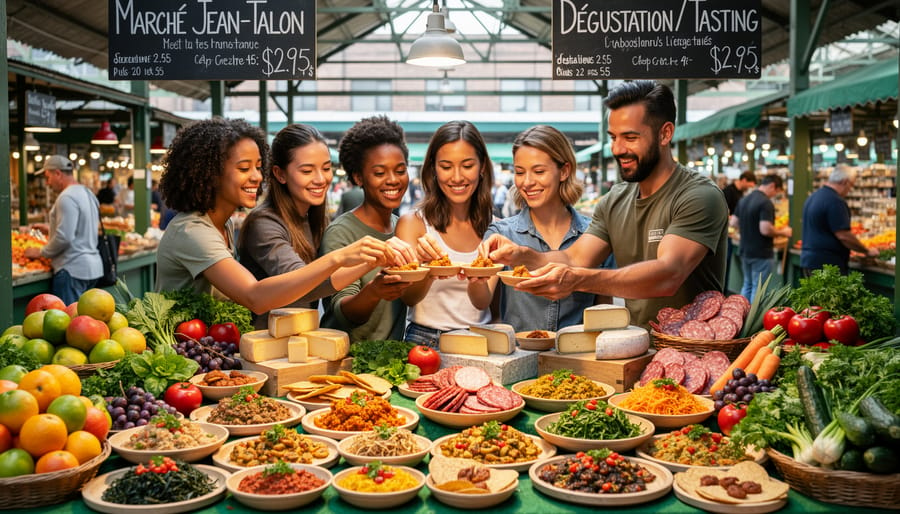
Jean-Talon Market functions as Montreal’s edible passport. Vendors speak Creole, Italian, Portuguese, and Arabic alongside French and English. You can buy fresh dates from a Moroccan importer, then grab Salvadoran pupusas from a food truck. It’s one of the Montreal food markets where diversity isn’t a buzzword, it’s breakfast, lunch, and dinner.
Festivals, Arts, and Community Spaces
Montreal’s cultural calendar doesn’t just reflect diversity, it depends on it. Throughout 2026, the city hosts dozens of festivals and events that center voices often pushed to the margins of mainstream arts programming. These gatherings do more than entertain; they create space for communities to celebrate heritage, challenge stereotypes, and claim visibility in a city that’s still negotiating what inclusion really means.
The Festival du Monde Arabe brings Arab cinema, music, and literature to venues across the city each November, drawing crowds that span generations and backgrounds. Black History Month in February has evolved beyond token acknowledgment into a month-long series of panels, concerts, and art exhibitions that spotlight Afro-Caribbean and African diaspora contributions to Montreal’s identity. Latin festivals like FestiBlues and smaller neighborhood block parties in Parc-Extension and Villeray pulse with salsa, bachata, and reggaeton, turning streets into impromptu dance floors where language barriers dissolve.
Pride remains one of the city’s largest celebrations, but smaller, more focused events, like Two-Spirit gatherings and Queer People of Color nights, address intersectional experiences within LGBTQ+ communities. Indigenous art showcases at venues like the Maison de la culture and partnerships with Kahnawà:ke and Kanehsatà:ke artists are slowly shifting the culture scene toward decolonization and respect for original land stewards.
Community centers anchor this work year-round. Côte-des-Neiges’s Centre Africa hosts West African drumming and literacy programs. Maison d’Haiti offers legal aid, French classes, and cultural events. The Atwater Library’s multilingual storytelling hours serve kids in Arabic, Spanish, and Mandarin. These aren’t tourist attractions, they’re lifelines where newcomers find footing, language learners practice without judgment, and long-time residents connect across difference. The city’s richest cultural experiences happen in these unglamorous, essential spaces where diversity isn’t performed but lived.
Challenges and the Road Ahead
Montreal’s diversity is undeniable, but the city still grapples with deep inequities that prevent many communities from fully participating in its promise. Racialized residents face systemic barriers in hiring, with studies showing that résumés with non-francophone names receive fewer callbacks even when qualifications match. Leadership roles in both the public and private sectors remain overwhelmingly white, a gap that persists despite the city’s multicultural makeup.
Housing discrimination is another persistent issue. Landlords sometimes reject prospective tenants based on ethnicity or language, pushing marginalized groups into overcrowded or underserved neighborhoods. Meanwhile, Bill 96’s stricter French-language requirements, though intended to protect Quebec’s linguistic identity, have created friction for newcomers and non-francophone communities trying to access services, education, and employment.
But resistance is building. Grassroots organizations like the Center for Research-Action on Race Relations and Hoodstock are holding institutions accountable, advocating for anti-racism policies and economic inclusion. Community-led initiatives in neighborhoods like Parc-Extension and Côte-des-Neiges are creating mentorship programs, entrepreneurship supports, and cultural bridges that address gaps government policy has overlooked.
Policy shifts are slowly following. Montreal’s municipal government has committed to diversity targets in hiring and procurement, prioritizing contracts with minority-owned businesses. Some employers now conduct bias audits and publish annual equity reports, though progress remains uneven.
The road ahead requires more than statements, it demands structural change, accountability, and a willingness to confront uncomfortable truths. Montreal’s diversity will only thrive when equal opportunity becomes lived reality, not just aspiration. The work is ongoing, and the city’s future depends on who shows up to do it.
What You Can Do to Support Diversity and Equal Opportunity
Start small, show up, and listen. Supporting diversity in Montreal isn’t about grand gestures, it’s about where you spend your money, how you engage with your neighbors, and what you choose to learn.
- Shop at businesses owned by newcomers and racialized Montrealers, buy your coffee from a Haitian café, your groceries from a Pakistani grocer, your pastries from a Syrian bakery.
- Attend festivals and events that celebrate cultures outside your own, skip the familiar and try the Afro-Caribbean festival in Parc Jean-Drapeau, a Filipino film screening, or a Bengali music night.
- Learn greetings and basic phrases in languages beyond French and English, Arabic, Mandarin, Spanish, Creole, and use them when you can.
- Speak up when you see bias in your workplace or community, question hiring practices, call out microaggressions, and push for inclusive policies where you have influence.
- Reflect on your own assumptions, notice who you make space for on the sidewalk, whose expertise you dismiss, and whose stories you’ve never heard.
These actions fit into daily routines. Grab lunch in Parc-Ex instead of your usual spot. Join a neighborhood cleanup organized by a community group you’ve never worked with. When summer hits, explore multicultural gatherings at picnic spots across the city or seek out beach vibes in neighborhoods you’ve overlooked. The goal is exposure, not performance. Real change happens when you make inclusion a habit, not a project.
Montreal’s diversity isn’t a recent trend, it’s woven into the city’s DNA, from the Indigenous territories on which it stands to the 120+ languages spoken on its streets today. This multicultural foundation shapes everything: the shawarma joints lighting up Saint-Laurent at midnight, the multilingual job postings in Old Montreal tech hubs, the Haitian-Filipino-Vietnamese mix at Jean-Talon Market, the equity audits reshaping corporate culture. Equal opportunity isn’t just policy here; it’s the practice of making space for everyone’s story to flourish. As Montreal evolves in 2026, its strength lies in embracing this complexity, celebrating difference while demanding fairness.
What percentage of Montrealers are immigrants?
Roughly 34% of Montreal’s population is foreign-born, with immigrant communities concentrated in neighborhoods like Côte-des-Neiges and Parc-Extension.
Is Montreal welcoming to newcomers?
Generally yes, though newcomers may face challenges navigating language requirements and systemic barriers. Community organizations and cultural hubs offer strong support networks.
How does language policy affect diversity?
Bill 96 strengthens French-language requirements in workplaces and services, which can create tension but also pushes companies to offer better language training and inclusive onboarding.
Whether you’re here for a weekend or a lifetime, lean into Montreal’s mosaic. Eat outside your comfort zone, learn a few words of Arabic or Creole, support businesses run by people who reflect the city’s full spectrum. Attend a festival you’ve never heard of. Ask questions. Montreal’s diversity is its superpower, and it’s yours to explore, embrace, and amplify.




+ There are no comments
Add yours