
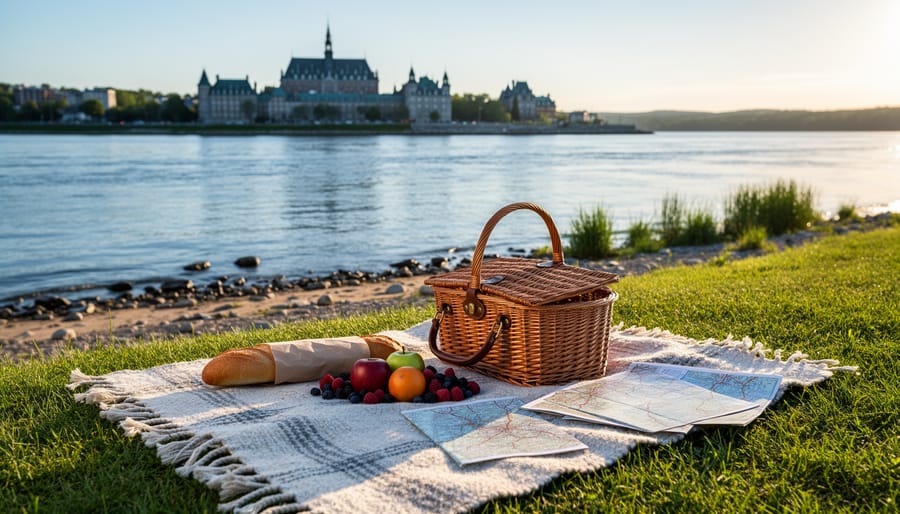
A week split between Montreal and Quebec City gives you two distinct cities, two moods, and enough time to step off the cobblestones when you need a breather. The smart move? Build in a few beach breaks and picnic-worthy green spaces so you’re not museum-hopping for seven days straight. Montreal delivers urban parks along the St. Lawrence and hidden stretches of sand that locals actually use, while Quebec City offers riverside escapes and the Montmorency Falls area as a natural bridge between the two destinations.
This guide picks seven spots where you can slow down, spread out a blanket, or dip your toes in the water without blowing your schedule. Each location fits neatly into a week-long itinerary and offers something the standard walking tours skip: actual downtime in places that feel less like tourist traps and more like where Montrealers and Quebecois go to unwind. You’ll get selection criteria so you know what makes each spot worth the detour, plus practical notes on timing and what to pack.
The goal isn’t to turn your city trip into a beach vacation. It’s to give you permission to pause, soak up some sun, and remember that the best travel days often include doing absolutely nothing for an hour or two. Whether you’re escaping the Plateau’s brunch crowds or taking a break from Old Quebec’s stone walls, these spots bring balance to a packed week.
How We Chose These Spots
We didn’t pick these spots by scrolling through generic travel blogs or chasing Instagram aesthetics. Every location here earned its place through a mix of on-the-ground experience, local validation, and practical tourist logic. Montreal’s outdoor spaces come with layered realities, some beaches are festival magnets, others are neighborhood secrets, and knowing the difference saves you wasted metro rides and disappointing picnics.
Our core selection criteria balanced visitor needs with genuine Montreal culture authenticity:
- Metro or bike accessibility within 30 minutes of downtown
- Vibe diversity across neighborhoods, from Plateau bohemian to West Island wild
- Local credibility, places Montrealers actually use, not tourist traps
- Seasonal appeal, emphasizing June-September prime conditions but noting year-round potential
We prioritized spots that serve different traveler profiles. Solo visitors need safe, transit-friendly options where showing up alone doesn’t feel awkward. Couples want romantic settings without manufactured romance. Families require washrooms, shade, and activities beyond “sit on grass.” Each location below addresses at least two of these groups explicitly.
Proximity to major attractions mattered because you’re juggling Old Montreal cobblestones, Plateau brunch waits, and potentially a Quebec City day trip. These spots slot into existing itineraries rather than demanding full-day commitments. You can knock out Notre-Dame Basilica in the morning, picnic at Parc La Fontaine by 2 PM, and still make your 7 PM reservation on Saint-Laurent.
Finally, we leaned on real visitor patterns, not theoretical best-case scenarios. That means acknowledging weekend crowds, noting which spots get buggy in August, and calling out the parks where locals spread blankets versus the ones they just bike past. This isn’t a fantasy Montreal; it’s the version you’ll actually encounter in 2026.
1. Parc Jean-Drapeau Beach (Jean-Doré Beach), Urban Island Escape
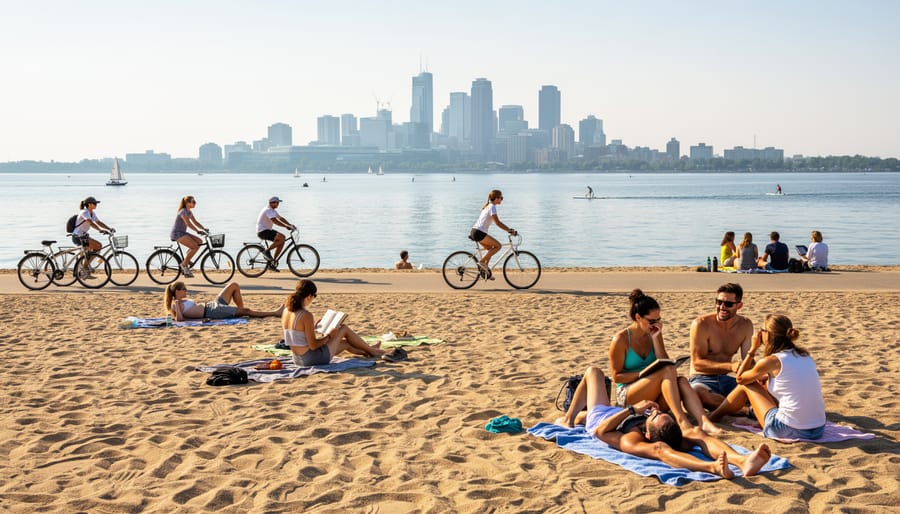
Jean-Doré Beach sits on Île Sainte-Hélène in the middle of the St. Lawrence River, making it Montreal’s only official sandy beach and a surprising urban oasis just ten minutes from downtown. The location shares an island with the Biosphère and the old Expo 67 grounds, placing you smack in the middle of Montreal’s culture scene context while you’re lounging in a beach chair.
The sand stretches about 160 meters along a protected cove, with actual lifeguards on duty during summer hours and water quality monitored regularly. You’ll find proper facilities: changing rooms, outdoor showers, lockers you can rent for the day, and beach volleyball courts that fill up fast on weekends. A small snack bar sells overpriced but convenient drinks and sandwiches, though locals know to pack a cooler.
What makes Jean-Doré perfect for day three or four of your itinerary is the reset it provides. After pounding pavement through Old Montreal and the Plateau, sprawling on sand with a skyline view across the water hits differently. The beach gets busy but never feels claustrophobic, and the vibe leans local rather than touristy.
Timing matters here. Major festivals at Parc Jean-Drapeau, especially Osheaga in late July and Île Soniq in August, can close beach access or pack the metro. Check the event calendar before you go. Outside festival weekends, aim for weekday mornings or late afternoons when the sand is less crowded and the light is gorgeous.
Rent a BIXI bike at any downtown station and pedal across the Jacques-Cartier Bridge bike path. Once on the island, you can loop the entire perimeter in about 45 minutes, hitting the beach, the casino viewpoint, and the Gilles Villeneuve Circuit. The bike freedom turns a beach day into a proper island exploration without dealing with parking or packed shuttle buses.
2. Parc La Fontaine, Old Montreal Picnic with a Side of Culture
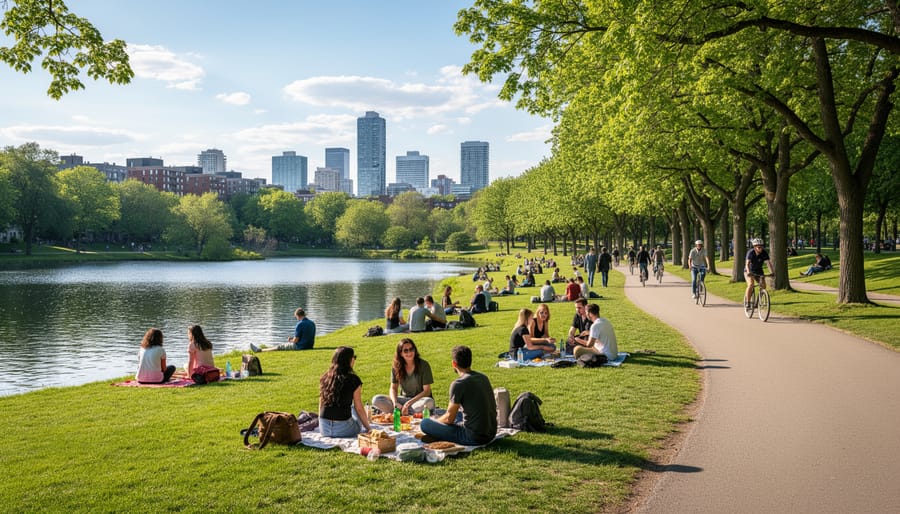
Tucked into the Plateau-Mont-Royal neighbourhood, Parc La Fontaine delivers the kind of relaxed, bilingual charm that makes Montreal feel like nowhere else. Two ornamental ponds anchor the park, one feeds a small fountain, the other hosts paddle boats in summer, and both are ringed by grassy lawns where locals sprawl with grocery-store wine, homemade sandwiches, and paperbacks in French and English. Unlike the Montreal beach vibes you’ll find on Île Sainte-Hélène, La Fontaine is pure urban park picnic: no sand, just shade trees, benches, and a soundtrack of kids playing and distant conversations.
The park sits a five-minute walk from Sherbrooke or Mont-Royal metro stations, making it easy to slot into your itinerary after exploring the Plateau’s murals and vintage shops. Swing by St-Viateur or Fairmount for bagels, still warm if you time it right, then grab cheese and fruit from a nearby dépanneur. The southwest corner near Calixa-Lavallée Avenue offers the best tree cover and stays slightly quieter on weekends, while the pond-side lawns fill up fast with families and picnic blankets by noon.
Summer brings free outdoor theatre performances at the Théâtre de Verdure, usually kicking off around 8 p.m. Check the city’s culture calendar before you go, but even without a show, the park hums with energy: joggers circling the paths, friends tossing frisbees, couples sharing éclairs from nearby patisseries. The mix of French chatter, English laughter, and kids yelling in both languages captures the city’s bilingual soul better than any guidebook paragraph.
Pack a blanket, skip the tourist traps, and spend an afternoon here. It’s Montreal picnicking at its most authentic.
3. Parc du Mont-Royal, Elevated Picnic with Skyline Views
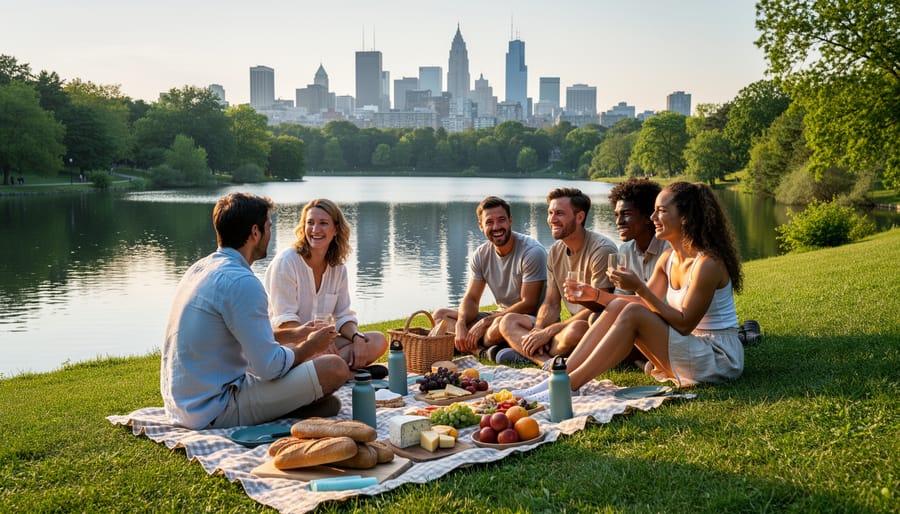
Parc du Mont-Royal delivers what most city parks can’t: a genuine mountain hike that ends with a picnic overlooking the entire city. You’ll earn your lunch here, but the 20-minute climb from avenue du Parc to Beaver Lake (Lac aux Castors) is manageable for most fitness levels, and the payoff, sprawling lawns framed by forest and skyline, makes it Montreal’s most iconic outdoor spot.
Beaver Lake sits in a natural bowl surrounded by trees, with grassy slopes perfect for spreading a blanket. In summer, rent a paddleboat and glide across the shallow water before claiming a shaded patch under the maples. The summit meadows near the Kondiaronk Belvedere offer even more dramatic views: downtown skyscrapers, the St. Lawrence River, and on clear days, the distant mountains. Bring provisions from Jean-Talon Market or grab a smoked meat sandwich in the Plateau before you ascend. Summer weekends often feature food trucks near the Beaver Lake pavilion, selling everything from poutine to Lebanese wraps, though prices run higher than street level.
Sunday afternoons bring the legendary Tam-Tams drum circle to the Jeanne-Mance monument meadow on the park’s eastern flank. Hundreds gather with drums, juggling props, and picnic spreads, creating a spontaneous festival atmosphere. It’s chaotic, loud, and quintessentially Montreal, expect clouds of… well, let’s just say the vibe is relaxed. If you prefer quieter picnicking, head to the western slopes near the Lachine Canal waterfront side or visit on weekdays.
Pack layers. Even in July, the summit catches breezes that feel ten degrees cooler than downtown. The reward for schlepping your picnic uphill? Watching the city light up at dusk while you finish that bottle of rosé.
4. Lachine Canal Waterfront, Pedal, Picnic, Repeat
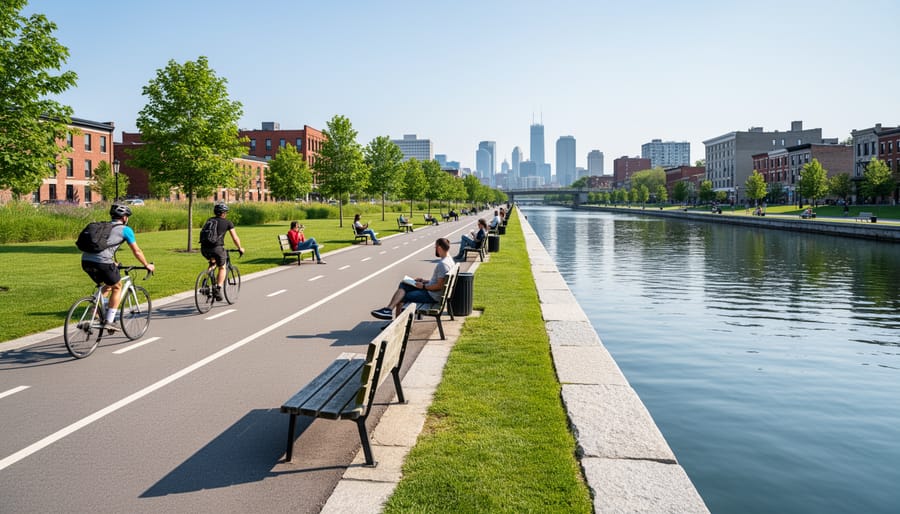
The Lachine Canal isn’t your typical park, it’s 14.5 kilometres of continuous waterfront stretching southwest from the Old Port, and it’s where Montrealers come to move. Picture a paved bike path hugging the water on both sides, punctuated by grassy slopes, converted industrial buildings housing craft breweries, and locals stretched out on blankets with cheese and wine. You can rent bikes near the Old Port entrance or bring your own, pedal as far as your legs want to carry you, then claim a patch of lawn wherever the vibe feels right.
The canal’s genius lies in its pit-stop potential. Around kilometre four, you’ll hit Atwater Market, lock your bike, grab fresh strawberries, crusty bread, and maybe some smoked meat from the deli counter, then continue another kilometre to the Charlevoix or Lionel-Groulx areas where wider green spaces invite longer stays. Benches dot the entire route if you prefer people-watching over grass sitting. Summer weekends see kayakers gliding past, families fishing off the banks, and the occasional heron stalking the shallows.
The brewery concentration between Atwater and Saint-Henri means you can trade picnic mode for a cold pint on a sunny patio without straying from the path. Le Reso and Brasserie Harricana both open directly onto the canal, patio chairs facing the water. If you’re chasing a longer ride, push all the way to Lachine’s lakefront (the canal empties into Lac Saint-Louis) or save energy for the West Island’s wilder Cap-Saint-Jacques beach another day.
Pack sunscreen, bring a lock for your bike, and expect this stretch to eat up half a day if you let it. It’s active relaxation at its most Montreal.
5. Cap-Saint-Jacques Nature Park, Wild Beach on the West Island
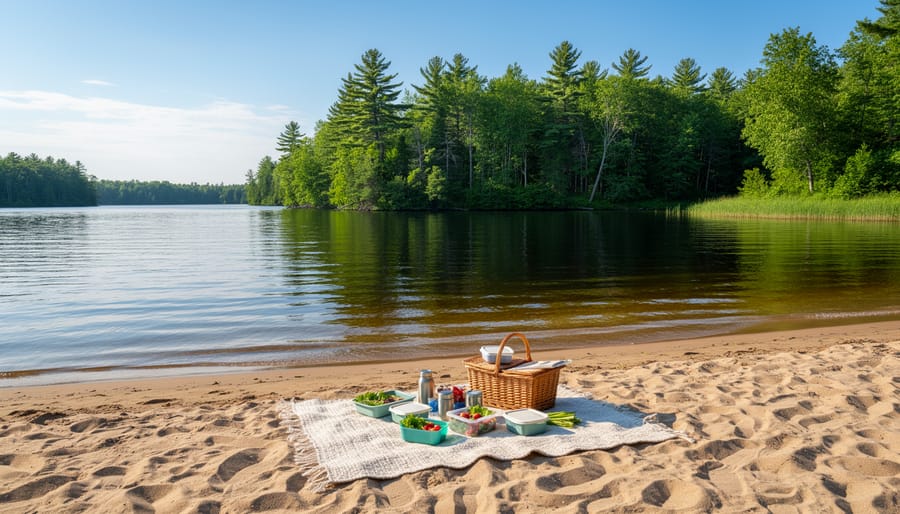
Cap-Saint-Jacques sits on the far western tip of the island, where Lac des Deux Montagnes meets forested trails and farmland that feels miles from downtown (though it’s only about 30 minutes by car or the 68 bus from Côte-Vertu metro). This is Montreal’s largest nature park, clocking in at 288 hectares of marshes, maple groves, and a genuine sandy beach that locals guard like a secret.
The beach here isn’t manicured like Jean-Doré. You get shallow, swimmable water backed by dunes and tall grasses, with lifeguards on duty in summer and a laid-back vibe that attracts families and couples seeking quiet. The sand is clean, the water tests safe, and on weekdays you might have whole stretches to yourself. Bring your own shade, trees near the waterline are limited, and pack snacks, though the on-site Ecological Farm sells organic vegetables, honey, and preserves if you want to build a truly local picnic.
Beyond the beach, 32 kilometres of marked trails wind through sugar bush forests and along wetland boardwalks. You’ll spot great blue herons, turtles sunning on logs, and in autumn, the maples explode in colour. The farm operates seasonally with a small petting area and educational centre, adding a family-friendly dimension without the theme-park crowds.
The trade-off for this escape is accessibility. Without a car, you’re committed to the bus route and a bit of walking from the nearest stop. But that barrier keeps crowds thin and the atmosphere authentic. If your 7-day itinerary includes a rest day or you’re craving actual wilderness after all that cobblestone and poutine, Cap-Saint-Jacques delivers a side of Montreal most tourists never see, wild, green, and genuinely peaceful.
6. Parc des Rapides, Riverside Picnic with a Dramatic Backdrop
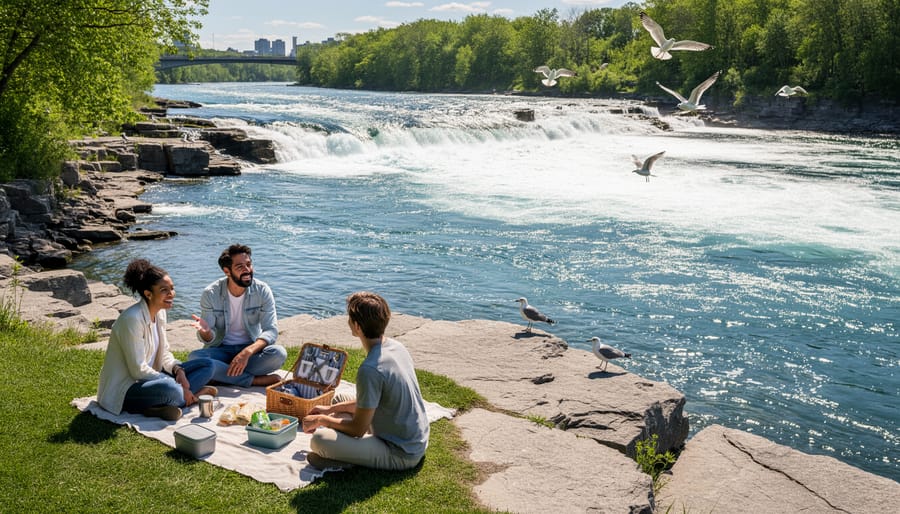
If you’re craving an authentic local experience away from the tourist-packed trails, Parc des Rapides in LaSalle delivers raw natural drama without the crowds. This 30-hectare riverside park sits along the mighty Lachine Rapids, where the St. Lawrence River churns through a narrow channel with such force you can feel the thunder in your chest from the shoreline. While most visitors flock to Mont-Royal or Jean-Drapeau, Montrealers who know slip down here for picnics with a soundtrack of roaring whitewater.
The park’s main draw is the viewing platforms along the rapids themselves. Stand close enough to feel the mist, and on clear days you’ll spot kayakers and rafters tackling the Class III-IV waves below. The sheer volume of water surging past is hypnotic, especially in spring when snowmelt swells the current. But step back from the edge and you’ll find a completely different vibe: grassy expanses dotted with picnic tables, mature trees providing shade, and a surprising sense of calm despite the adjacent fury.
Birdwatchers bring binoculars here year-round. The park sits on a migratory flyway, so great blue herons stalk the shallows, and if you’re lucky you’ll catch cormorants diving or even a bald eagle overhead. The 2.6-kilometer trail loops through wooded sections and wetlands, ideal for walking off your sandwich before settling in for round two of cheese and baguette.
Pack your cooler and claim a table near the rapids for maximum drama, or retreat to the quieter inland picnic areas if you want conversation without shouting over the water. Either way, you’re experiencing a side of Montreal that most week-long itineraries completely miss. The No. 110 bus from Angrignon metro gets you here in 20 minutes, proving you don’t need a car to escape the city noise.
7. Quebec City Day Trip Add-On: Parc de la Chute-Montmorency
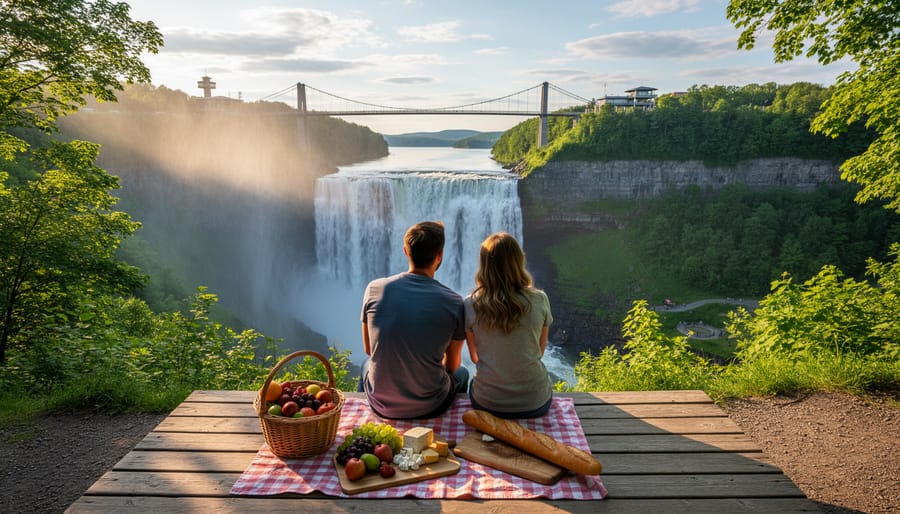
The thundering cascade at Parc de la Chute-Montmorency marks your transition between cities, a 272-foot waterfall that actually towers higher than Niagara, spilling into the St. Lawrence River with a force you’ll feel in your chest. About 15 minutes northeast of Quebec City’s Old Town, this provincial park delivers the nature hit your itinerary needs without derailing your urban agenda.
You’ve got options for experiencing the falls. The cable car ($18.29 round-trip) whisks you from the lower parking area to the cliff-top platforms in under two minutes, offering stomach-dropping views as you ascend alongside the torrent. If you’d rather earn the view, the panoramic staircase climbs 487 steps, free, but your calves will remember it. At the summit, the suspension bridge sways 276 feet above the Montmorency River, stretching directly over the falls’ crest. It’s equal parts exhilarating and terrifying, especially when mist from the churning water below soaks the walkway.
The picnic grounds sprawl across the upper plateau, where covered pavilions and scattered tables overlook the falls and river valley. Pack provisions from Quebec City (the Jean-Talon Market croissants travel well) or grab sandwiches at the on-site Manor restaurant. Spring and early summer intensify the water volume from snowmelt, creating maximum drama and a constant rainbow in the spray. By late July, the flow calms slightly, but you’ll actually stay drier on the platforms.
Budget 90 minutes to two hours here, enough to cross the bridge, picnic, and snap photos without rushing back to your Old Quebec dinner reservation. The park stays open until 9 PM in summer, so a late-afternoon visit catches golden-hour light painting the cliffs. Just know that weekends draw coach-tour crowds; weekday mornings offer elbow room and clearer bridge photos.
Fitting Beach and Picnic Time Into Your 7-Day Itinerary
Slotting beach and picnic breaks into a week-long itinerary keeps you energized without derailing your cultural agenda. Day 3 works beautifully for Parc Jean-Drapeau Beach after you’ve tackled Old Montreal’s cobblestones and basilicas, your legs will thank you for the sand and swim. Reserve Day 5 as a proper rest day at Cap-Saint-Jacques or Parc La Fontaine, especially if you’ve been museum-hopping hard at the Musée des Beaux-Arts or exploring Plateau murals. Lachine Canal fits naturally into Day 2 or 6 when you’re already near Atwater Market or the Old Port, letting you grab provisions and pedal to a picnic spot without backtracking.
If Quebec City anchors Day 6-7, save Parc de la Chute-Montmorency for the drive between cities or as your Quebec arrival activity, it breaks up the three-hour journey and delivers instant nature drama. Montreal’s summer weather in 2026 will likely mirror past patterns: warm days (25-30°C) with occasional thunderstorms rolling in late afternoon, so plan outdoor time for mornings or early evenings and carry a light rain jacket. Check sunset times (around 8:30 PM in July) to extend picnic hours into that golden-hour glow Montrealers live for. Build flexibility around restaurant reservations, most spots hold tables until 7 PM, giving you a solid beach afternoon before dinner in Mile End or the Quartier Latin.
Questions You’re Probably Asking
Most visitors planning a week split between Montreal and Quebec City eventually ask the same logistical questions, usually right after they’ve packed too many sweaters or assumed every park allows wine. Here’s what you actually need to know before you spread out that picnic blanket.
Are Montreal beaches and parks free to visit?
Yes, all the beach and picnic spots mentioned, including Jean-Doré Beach, Parc La Fontaine, and Cap-Saint-Jacques, have free entry. You might pay for extras like bike rentals or paddle boats, but access itself costs nothing.
Can you drink alcohol in Montreal parks?
Technically, you can drink in designated picnic areas if you’re also eating a meal, but enforcement varies widely. Many locals enjoy wine with their cheese spread at spots like Mont-Royal or La Fontaine without issue, though it’s wise to keep it low-key and actually have food out.
What’s the best time of year for these outdoor spots?
Late June through August delivers peak beach and picnic weather, with Jean-Doré Beach operating lifeguards only during this window. September offers gorgeous fall colours at Mont-Royal and fewer crowds, though water temperatures drop and some facilities close after Labour Day.
How do I reach Cap-Saint-Jacques without a car?
Take the metro to Côte-Vertu station, then catch STM bus 68 north to the park entrance. The trip takes about 50 minutes total, and buses run every 15-20 minutes on weekends during summer.
If rain derails your outdoor plans, pivot to covered markets like Jean-Talon or Atwater where you can still grab picnic supplies and eat under the pavilions. The Lachine Canal has sheltered sections under bridges where locals post up during light drizzle, and honestly, a rainy afternoon is your excuse to camp out in a Mile End café with a good book. Montreal summers can shift fast, so carry a light rain jacket and have a backup museum or brewery visit queued up on your phone.
Your seven days don’t have to be a relentless march through attractions. The real Montreal summer vibe happens on a picnic blanket at La Fontaine, toes in the sand at Jean-Doré, or watching the Lachine Rapids with a bag of Atwater Market cheese. Quebecers have mastered the art of balancing hustle with langueur, that untranslatable slowness that makes a city trip feel like an actual vacation.
Pack a reusable tote and pick up provisions at whichever market you’re closest to. Grab a baguette, some local cheese, maybe a bottle of rosé (yes, alcohol is allowed in designated park zones during meal hours), and claim your patch of grass. You’ll find yourself sitting next to students practicing guitar, families speaking a rapid-fire mix of French and English, and couples who’ve clearly been coming to the same spot for years.
When you get home and someone asks about your trip, you won’t just remember the basilica or the smoked meat. You’ll remember the afternoon you spent doing absolutely nothing productive at Mont-Royal, watching the city shimmer below, feeling like you’d cracked some secret code. That’s the Montreal summer energy worth bringing home, the permission to slow down, even when there’s so much to see.






+ There are no comments
Add yours