
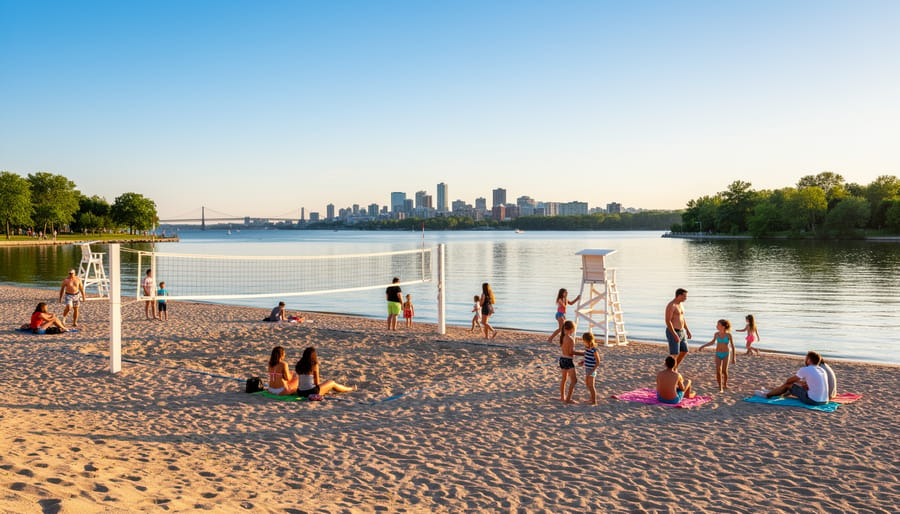
Yes, Montreal has beaches. Real ones.
Surprise registers on most visitors’ faces when they learn this landlocked island city carved out sandy shores along the St. Lawrence River and surrounding waterways. But here’s the truth: come summer, Montrealers grab their towels, pack their coolers, and head to actual beaches where you can swim, sunbathe, and pretend you’re somewhere a lot more tropical than Quebec.
The city’s beach scene isn’t some marketing gimmick. Clock Tower Beach sits right in the Old Port, where you can dig your toes into imported sand while container ships glide past in the background. Jean-Doré Beach on Île Sainte-Hélène stretches for a full kilometer along a filtered lagoon that’s cleaner than most urban waterways have any right to be. Cap-Saint-Jacques Nature Park offers three different beach areas on Lac des Deux Montagnes, feeling more cottage country than city limits even though you’re technically still in Montreal.
The vibe is distinctly urban beach culture. You won’t find palm trees or oceanfront resorts, but you will find families grilling on portable BBQs, groups playing volleyball, and that unmistakable summer energy that makes Montrealers squeeze every drop of warmth from our short beach season. Most beaches open late May through early September, with lifeguards on duty and facilities that range from basic to surprisingly well-equipped.
Whether you’re a skeptical tourist or a local who somehow never knew these existed, Montreal’s beaches deliver that essential summer escape without leaving the 514.
Montreal’s Best Urban Beaches: Sand, Sun, and City Skylines
Jean-Doré Beach: Montreal’s Island Paradise
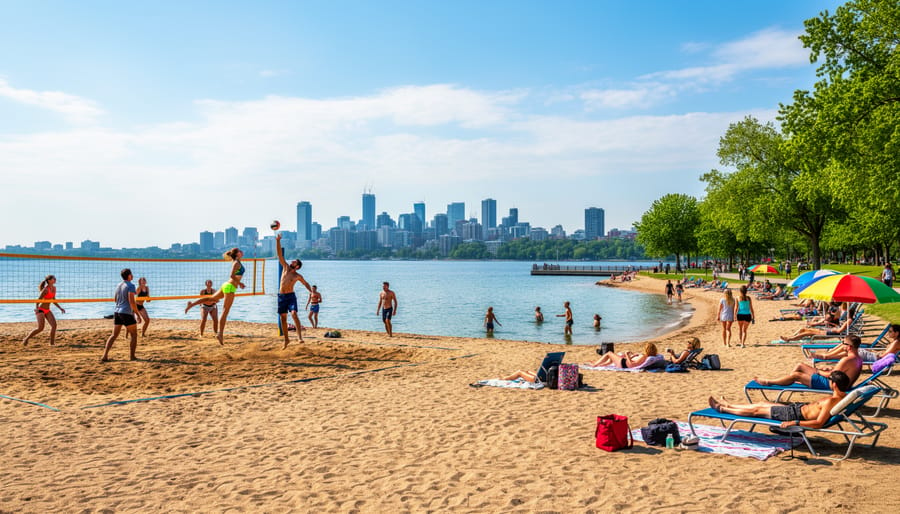
Jean-Doré Beach sits on Île Sainte-Hélène, a man-made island in the middle of the St. Lawrence that somehow feels worlds away from downtown Montreal’s traffic. This is the beach that actually delivers, white sand trucked in, volleyball nets taut and ready, lifeguards scanning swimmers bobbing in filtered water that’s cleaner than you’d expect from an urban river beach. On summer weekends, it’s packed with twentysomethings playing spike ball, families camped under umbrellas, and groups blasting reggaeton from portable speakers.
The beach runs about 150 meters along the island’s shore, wide enough that you can usually stake out your own patch of sand even when it’s busy. The water is shallow for the first twenty meters, which makes it ideal for kids and reluctant swimmers. By late afternoon, the whole scene picks up festival energy, Osheaga and Île Soniq happen right here, so the vibe carries over into regular beach days. Food trucks park near the entrance selling everything from tacos to ice cream, and there’s a permanent snack bar if you forget to pack lunch.
Getting here is dead simple: take the metro to Jean-Drapeau station, then it’s a ten-minute walk through the park. Parking exists but fills up by noon on hot days. Bring cash for locker rentals and expect to spend the whole day, this beach in Montreal, Canada actually rewards staying put.
Clock Tower Beach: Old Montreal’s Hidden Sandy Spot
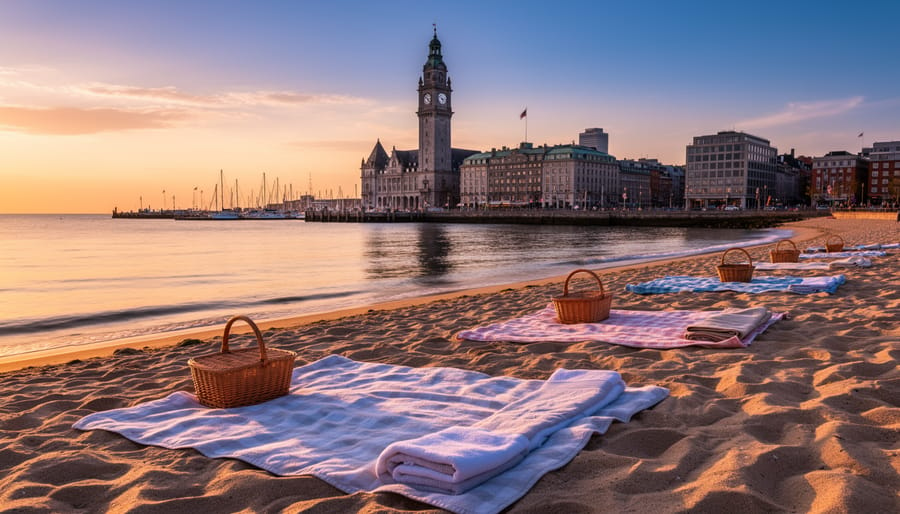
Tucked between the cobblestones of Old Montreal and the working port, Clock Tower Beach is the kind of spot locals whisper about to friends who won’t blow up the vibe. It’s smaller than Jean-Doré, think cozy urban oasis rather than sprawling resort, but what it lacks in size it makes up for in sheer atmosphere. The beach offers sand and amenities right against the backdrop of Montreal’s skyline, with container ships drifting past and the clock tower standing guard like a vintage sentinel.
Come late afternoon when the sun dips toward the St. Lawrence and gilds everything gold. Spread a blanket, crack open whatever you picked up from the Atwater Market, and watch downtown light up as the water turns pink. Weekdays are quieter, you might share the sand with a handful of regulars and tourists who stumbled off the beaten path. Weekends bring young Montrealers treating it like their private beach club, complete with speakers and impromptu volleyball.
The water’s cold even in July, but that’s half the charm. You’re here for the view, the vibe, and the fact that you’re lounging on a beach in a 400-year-old port district. Pack light, arrive before 5 p.m. to claim your spot, and stay until the city skyline does its thing at dusk.
River and Lake Beaches Just Outside Downtown
Cap-Saint-Jacques: Wild Swimming in the West Island
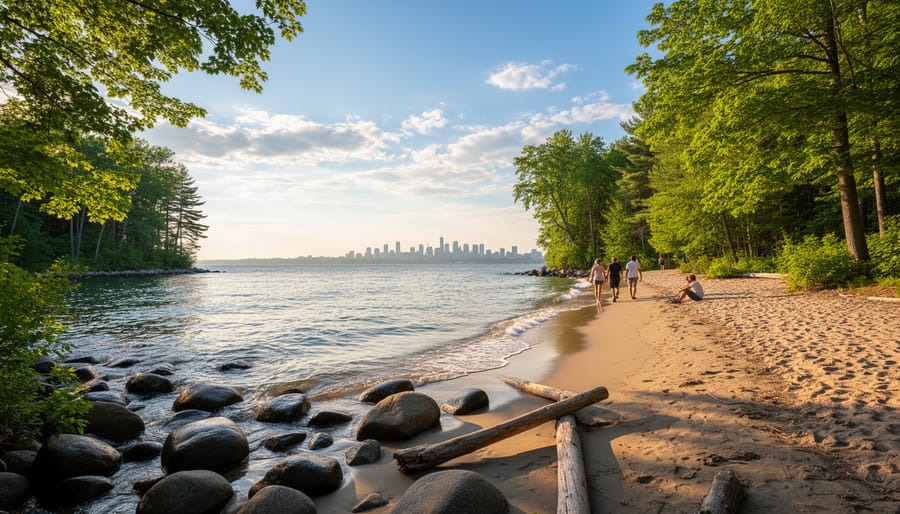
Cap-Saint-Jacques feels like you’ve left Montreal entirely, even though you’re still technically within city limits. Tucked into the northwestern corner of Pierrefonds-Roxboro, this 288-hectare nature park wraps around a peninsula jutting into Lac des Deux Montagnes, delivering the kind of wilderness experience most Montrealers don’t expect twenty minutes from downtown.
The beach here is the real deal, a proper crescent of sand backed by trees instead of condos. The water’s clean enough that locals actually swim rather than just wade, and the shallow entry makes it ideal for families who want their kids to splash around without constant panic. You won’t find volleyball nets or beach bars, which is precisely the point. People bring coolers, claim a patch of sand under the pines, and spend entire afternoons doing absolutely nothing.
Beyond the shoreline, the park’s natural sand beach and farm setup gives you hiking trails through maple forests, bike paths that loop the peninsula, and an actual working heritage farm where kids lose their minds over chickens and goats. The trails connect to quiet lookouts over the lake, perfect for those post-swim moments when you want to dry off somewhere scenic.
Getting here requires a car or a long STM bus ride, but that’s part of what keeps it from feeling overrun. Pack your own food, there’s a small snack bar, but it’s nothing fancy, and bring bug spray for the wooded sections. This is Montreal’s best answer to cottage country without leaving the island.
Pointe-aux-Prairies: East End’s Waterfront Gem
Most Montrealers have never heard of Pointe-aux-Prairies beach, which is exactly why locals in Rivière-des-Prairies, Pointe-aux-Prairies keep coming back. Tucked into the Parc Nature de la Pointe-aux-Prairies on the eastern edge of the island, this sandy stretch sits where the Rivière des Prairies meets marshlands and forest trails. You won’t find food trucks or volleyball nets here. What you get instead is quiet water, real nature, and actual breathing room on a Saturday afternoon in July.
The beach itself is modest, more of a shoreline clearing than a sprawling sandy expanse, but the setting makes up for it. Boardwalks snake through wetlands thick with cattails and birdsong, leading to observation points where you can spot herons and turtles. Families spread out blankets under the shade of old maples, kids wade in shallow water, and the whole scene feels refreshingly unhurried compared to the circus at Jean-Doré.
Getting here requires a car or a long bus ride (the 189 from Radisson metro), which filters out the casual beach-goers. Pack everything you need, there are no vendors, just picnic tables, basic washrooms, and trails that stretch for kilometres through woods and along the water. The naturist beach area exists farther north if that’s your thing, but the main family-friendly zone stays clothing-required and low-key.
Come for the beach, stay for the trails. The park’s 14 kilometres of paths range from easy waterfront strolls to deeper forest walks, making this spot ideal if you want to combine swimming with actual exploration rather than just baking on sand.
What Makes a Montreal Beach Different (And Why That’s Great)
Montreal beaches won’t remind you of Miami or California, and that’s exactly what makes them brilliant. Here, you get something more interesting than cookie-cutter resort vibes, you get urban beaches with personality, where the skyline competes with the sunset and conversations switch between French and English mid-sentence.
Forget generic boardwalk chains. At Montreal beaches, you’re more likely to find someone grilling merguez sausages on a portable BBQ than selling overpriced hot dogs. The picnic culture here is next-level DIY: coolers packed with homemade tabouleh, SAQ wine, cheese from Jean-Talon Market, and yes, occasionally someone brings poutine in a takeout container because this is Montreal and rules are flexible. It’s potluck energy meets beach day, with groups sprawling across blankets like they’re hosting dinner parties on sand.
The multicultural vibe is real. You’ll hear Haitian Creole blasting from speakers at one blanket, Portuguese conversations at the next, and a group of students speaking Mandarin while playing beach volleyball. It feels less like a segregated tourist attraction and more like the city transplanted itself to the waterfront.
Now, about water quality. Montreal’s had its reputation issues, sure. But the city invested heavily in treatment infrastructure through the 2020s, and by 2026, beaches like Jean-Doré consistently meet provincial safety standards during peak season. Île-Bizard and Cap-Saint-Jacques benefit from better natural filtration. You won’t find Caribbean clarity, this is river and lake swimming, but it’s clean enough, monitored regularly, and honestly, locals stopped worrying about it years ago.
What you get is authenticity. Montreal beaches feel lived-in, loved by people who actually use them, not designed for Instagram influencers. They’re scrappy, vibrant, and unapologetically themselves.
Perfect Picnic Pairings: Where to Eat Before You Hit the Sand
Half the fun of a beach day in Montreal is the food you bring, and unlike packaged snacks from a depanneur, you can score genuinely great provisions without much effort. The city’s markets and food shops sit close enough to most beaches that you can load up on the way.
If you are heading to Jean-Doré Beach, stop at Atwater Market first. It is a quick detour from the metro line, and you will find everything from rotisserie chicken and fresh bread to local cheeses and fruit that actually tastes like something. Grab a baguette from Premiere Moisson, some strawberries, and maybe a wedge of Oka cheese. Toss in a few pastries for later. You have just built a picnic that costs less than two restaurant meals and tastes better than anything you will find on-site.
For Cap-Saint-Jacques in the west, Jean-Talon Market is your best bet if you are coming from the city center. The produce stalls alone could keep you busy for twenty minutes. Pick up tomatoes, basil, and bocconcini for a caprese situation, or keep it simple with charcuterie and olives. Do not sleep on the prepared food counters either, spanakopita, samosas, grilled vegetables, all travel well and taste great cold.
Clock Tower Beach calls for something lighter since you will likely be wandering the Old Port before or after. Hit up Olive et Gourmando or Tommy for sandwiches that hold up in the heat, or swing by Marché Atwater if you are biking in from the south. Pack everything in a cooler bag with ice packs, bring a blanket, and you are set. Montreal beach culture is DIY, and the food is half the point.
When to Go and What to Know for Summer 2026
Montreal’s beach season runs from late June through late August, with the best weather typically hitting in July and early August when water temperatures become actually swimmable. Weekdays are your friend if you hate crowds, Jean-Doré and Clock Tower beaches get packed on summer weekends, especially during festivals. Hit the sand before 10 AM or after 4 PM to snag prime spots and avoid the midday crush.
Getting there matters. Jean-Doré is metro-accessible (Jean-Drapeau station), while Cap-Saint-Jacques requires a car or a long bus ride. Street parking near Clock Tower Beach fills fast, so bike or metro to Champ-de-Mars station instead. Most beaches charge zero entrance fees, though Cap-Saint-Jacques has a small parking fee.
Weather in Montreal swings wildly even in summer. Pack layers, a scorching 28°C afternoon can drop to 18°C by sunset, especially near the water. Thunderstorms roll through quickly, so check radar before heading out. The city has improved water quality monitoring significantly, with real-time updates posted at beaches and online.
Are Montreal beaches free to visit?
Yes, all public beaches in Montreal are free. Some locations like Cap-Saint-Jacques charge a small parking fee, but beach access itself costs nothing.
Can you actually swim in the St. Lawrence River?
At designated beaches like Jean-Doré and Clock Tower, yes, the water is filtered and monitored. Swimming directly in the St. Lawrence outside these areas isn’t recommended due to currents and water quality.
Is there lifeguard supervision?
Jean-Doré Beach has lifeguards on duty during operating hours. Smaller beaches like Clock Tower and natural spots have no supervision, so swim at your own risk.
Which beach works best for kids?
Jean-Doré wins for families with its shallow supervised areas, playground equipment, and washroom facilities. Cap-Saint-Jacques offers a calmer, nature-focused alternative.
For 2026, the city expanded shaded areas at Jean-Doré and added more bike racks across all beach sites. No reservations needed, just show up, claim your patch of sand, and soak up that unexpected Montreal beach life.
Montreal’s beach scene might not be what you expected when you searched for a beach in Montreal, Canada, but that’s exactly what makes it special. This city has always thrived on defying expectations, where else can you build sandcastles with the skyline looming behind you, or debate whether to order your beach snacks in French or English? The beaches here aren’t trying to be Miami or the Mediterranean. They’re unapologetically Montreal: a little scrappy, always surprising, and deeply rooted in the city’s knack for creating joy out of unexpected spaces.
So grab your towel, pack something delicious from a local market, and spend a Saturday discovering these urban shores. Whether you’re a visitor wondering if Montreal really has beaches or a local who’s never bothered to check, summer 2026 is the time to claim your spot on the sand. The water’s waiting, the city’s watching from the shore, and the vibe is pure Montreal. That’s not just good enough, it’s better.







+ There are no comments
Add yours