

Journalism is the practice of gathering, verifying, and presenting information to the public about events, issues, and trends that affect their lives. Think of it as the connective tissue between what’s happening in the world and the people who need to know about it. Whether it’s a feature on Mile End’s changing streetscape in La Presse, breaking coverage of a municipal council vote at City Hall, or an investigation into housing practices published in The Gazette, journalism transforms raw facts into stories that help you understand your city, your country, and your world.
But here’s the thing: not everything you scroll past on your feed counts as journalism. Real journalism follows a process. It demands verification, not just aggregation. It requires editorial standards, not just viral reach. And in 2026, when anyone with a phone can broadcast information instantly, understanding what separates journalism from opinion, marketing, or misinformation matters more than ever.
This breakdown walks you through exactly how journalism works, from the beat reporter chasing down sources in Griffintown to the investigative team spending months on a single story. You’ll learn what defines the different types of journalism (news, features, investigative, opinion, and more), how reporters actually gather and verify information, and why the whole system exists in the first place. If you’ve ever wondered what makes a journalist different from an influencer, a columnist different from a blogger, or why some outlets charge subscriptions while others don’t, you’re in the right place. No jargon, no assumptions, just the straight goods on how journalism actually gets made.
What Journalism Means in the Modern City

Journalism is the practice of gathering, verifying, and presenting information to the public in a way that’s accurate, fair, and transparent. It’s what happens when someone investigates which new Mile End coffee shop actually roasts their own beans versus repackaging someone else’s, or digs into why your favourite Plateau restaurant suddenly closed. At its core, journalism means doing the legwork so readers don’t have to guess or rely on rumours.
The job depends on three non-negotiable principles. Accuracy means getting facts right, opening hours, chef names, historical details, quote attribution. Fairness requires representing different perspectives honestly, whether you’re covering a controversial food hall development or reviewing a polarizing art installation. Transparency means being clear about your methods, correcting mistakes openly, and disclosing any conflicts of interest. These news reporting standards apply whether you’re covering municipal politics or profiling the team behind a new natural wine bar.
In Montreal’s cultural landscape, journalism takes many forms. A restaurant review blends observation, tasting notes, and context about the neighbourhood or cuisine. An arts feature might profile a photographer preparing for their Musée d’art contemporain show, weaving together interviews, background research, and scene-setting. Service pieces guide readers through complex decisions, where to find the best croissants, how to navigate Osheaga, which galleries are worth the Métro ride.
- Beat reporting
- Covering a specific topic or neighbourhood consistently over time, building expertise and sources. A food beat reporter knows every chef opening in Little Italy.
- Editorial integrity
- Maintaining independence from commercial pressure. Reviews stay honest even when advertisers get upset.
- Sourcing
- Identifying and attributing where information comes from. Named sources build credibility; anonymous ones require extra justification.
- Fact-checking
- Verifying claims, dates, quotes, and details before publication. Did that brewery actually win that award?
- Angle
- The specific focus or perspective a story takes. “New ramen spot opens” versus “Former fine-dining chef pivots to casual tonkotsu.”
- Byline
- The writer’s name attached to a piece, signalling accountability for the reporting and writing.
What separates journalism from marketing copy or influencer posts is the commitment to verification and independence. A journalist confirms the chef’s background, checks health inspection records, tastes the food multiple times, and writes what they actually think, not what gets them free meals or affiliate clicks.
How Journalism Works: From Pitch to Publication
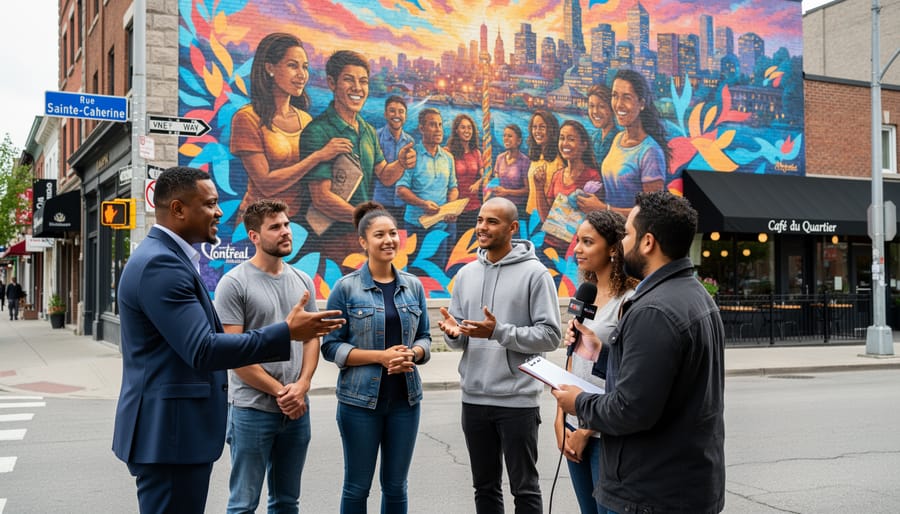
The journalism process starts long before anyone reads a restaurant feature or festival preview. Here’s how a piece of cultural journalism moves from idea to your screen.
Story ideation begins with observation and instinct. A journalist notices a new bistro opening on Rue Saint-Viateur, hears buzz about a chef leaving a high-profile kitchen, or spots a pattern in Montreal’s dining scene. Maybe Festival International de Jazz announces its lineup and the newsroom needs coverage. The pitch happens next, writers propose angles to editors, explaining why readers care and what makes the story timely or unique.
Research follows approval. For that Mile End bistro profile, a journalist digs into the chef’s background, reads the menu, checks permits and opening dates, and looks at comparable restaurants. They reach out to sources: the owner, neighbouring business operators, food critics who’ve visited during soft opening. Every claim needs verification before it goes into print.
Interviews bring the story to life. The journalist sits down with the chef, asks about their culinary philosophy, signature dishes, and why they chose this neighbourhood. They might interview early diners for reactions, or talk to a sommelier about the wine program. Good interviews go beyond surface questions, they probe motivations, challenges, and what makes this place different from the twenty other new restaurants that opened this month.
Fact-checking in the editorial process catches errors before publication. Editors verify details: Is the chef’s previous restaurant named correctly? Are menu prices accurate? Did that award really happen in 2024, or was it 2023? Spelling of French names gets double-checked. Dates, addresses, and claims all get confirmed.
Editing shapes the draft. An editor tightens the prose, cuts redundancy, sharpens the lead, and ensures the piece matches the publication’s voice. They might push back on weak sources or ask for more specific examples. A fact that seemed solid gets questioned and re-verified.
Publication means the story goes live, online first, usually, with social promotion and maybe a print edition later. The journalist monitors comments and corrections, ready to update if readers spot errors. The cycle starts again with the next pitch.
Types of Journalism You’ll Find in Montreal
Cultural Journalism & Lifestyle Reporting
Cultural journalism doesn’t just report what’s happening, it interprets why it matters and helps you decide where to spend your time and money. When a Montreal food writer profiles a new Saint-Henri taqueria, they’re blending service journalism (hours, prices, what to order), criticism (evaluating technique and flavour), and storytelling (the chef’s journey from Mexico City to Montréal). This hybrid approach is what makes cultural coverage valuable: it’s informative, opinionated, and narrative-driven all at once.
A music review of a show at Place des Arts might analyze the performance while also capturing the energy in the room and providing context about the artist’s trajectory. A neighbourhood guide helps Montreal digital nomads discover coworking-friendly cafés while painting a picture of each area’s vibe. The best cultural journalism gives you both the practical details and the deeper meaning, explaining not just what’s new, but why it’s worth your attention in a city overflowing with options.
Where Journalism Gets Used: Applications in City Life

Quality journalism shapes how you experience Montreal every day. When you’re hunting for weekend plans, a well-reported feature on Plateau brunch spots does more than list options, it tells you which chef just returned from Lyon, which terrace gets morning sun, and why that new spot’s queue wraps around the block. These stories save you from disappointment and point you toward experiences worth your time and money.
Local journalism keeps you plugged into what matters. When a heritage building in Old Montreal faces demolition or a beloved Jean-Talon Market vendor retires after 40 years, thorough reporting preserves those stories and lets residents weigh in before decisions become final. You learn about the Mile End bakery closing next month or the Saint-Henri gallery opening next week, information that helps you participate in your neighborhood’s life, not just observe it from the sidelines.
For visitors, quality journalism cuts through the noise of sponsored posts and algorithm-fed recommendations. A properly researched guide to Montreal’s jazz scene explains which venues book established artists versus emerging talent, when festivals actually happen (not last year’s dates recycled), and how to navigate cover charges and reservations. That same standard applies whether you’re chasing real beach vibes along the Lachine Canal or tracking down the city’s best smoked meat, you want facts, context, and honest evaluation, not marketing copy disguised as advice.
Insider Tips: How to Spot Quality Journalism
Look for bylines and named sources. Quality journalism puts names to information, both the writer’s and the people they interviewed. If a restaurant piece quotes “a regular diner” without attribution or relies entirely on anonymous sources for opinion, that’s a red flag. Real journalists credit their sources and stand behind their work with their own name.
Check if the outlet corrects mistakes publicly. Publications with strong editorial standards run corrections when they get something wrong, usually at the bottom of the article or in a dedicated section. This transparency signals journalistic integrity they care more about accuracy than ego.
Watch for local expertise and specific details. A writer who actually knows Montreal will reference neighborhoods correctly (it’s “Mile End,” not “The Mile End”), spell French names properly, and include context that only comes from being here. Generic listicles can run anywhere; quality local journalism couldn’t exist in another city without major rewrites.
Distinguish editorial from sponsored content. Legitimate outlets clearly label paid partnerships, advertorials, and sponsored posts, often with headers like “Partner Content” or “Sponsored.” The language also shifts: sponsored pieces tend toward promotional superlatives (“the ultimate dining experience”), while editorial coverage includes critical perspective and context. If every sentence reads like a press release and there’s no disclosure, you’re reading marketing, not journalism.
Good journalism doesn’t just inform you, it connects you to the pulse of your city. In Montreal, where the cultural scene shifts faster than the weather, quality reporting helps you discover the hidden gem on Rue Saint-Denis before it blows up, understand why a beloved institution closed its doors, or decide which festival deserves your weekend. It’s the difference between trusting a journalist who interviewed the chef, visited multiple times, and knows the neighbourhood’s context versus scrolling through an influencer’s one-time sponsored post.
What’s the difference between journalism and blogging?
Journalism follows editorial standards including fact-checking, named sources, and accountability to readers. Bloggers may share valuable perspectives but typically aren’t bound by the same verification processes or transparency requirements.
How do journalists choose what to cover in Montreal?
Cultural journalists consider newsworthiness, audience interest, diversity of coverage, and what hasn’t been adequately covered elsewhere. They aim to serve readers with a mix of timely news, evergreen guides, and deeper features.
Can journalism be objective?
Complete objectivity is impossible, but good journalism pursues fairness, accuracy, and transparency about perspective. Cultural critics bring informed opinions while still adhering to factual standards.
How is cultural journalism funded?
Through reader subscriptions, advertising, grants, memberships, and sometimes events. Quality local journalism requires financial support to maintain editorial independence and thorough reporting.
The algorithm wants to keep you scrolling; journalism wants to keep you informed. Support the outlets doing the real work, the ones that send reporters to city council meetings, that maintain corrections policies, that invest in local expertise. Montreal’s cultural richness deserves more than aggregated listicles and PR rewrites. When you encounter journalism that genuinely helps you navigate this city, remember it’s worth protecting.






+ There are no comments
Add yours