
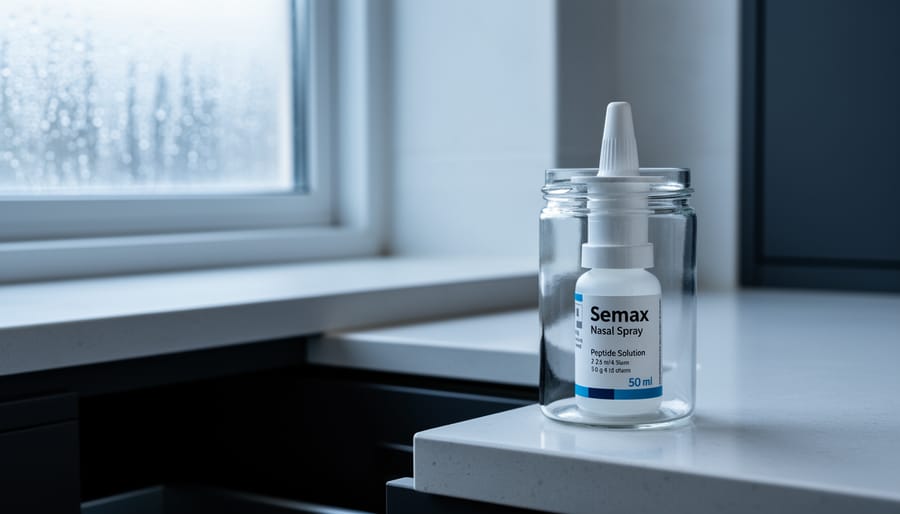
Storing Semax nasal spray comes down to three habits: keep it cool, keep it dark, and keep the nozzle clean. Follow the instructions printed on your vial’s label first, because the manufacturer’s guidance always beats general advice (including mine). If you picked up a bottle from https://kylopeptides.com/product/semax-nasal/ check the label and any included paperwork for the exact storage temperature and how long it stays good once opened.
Here’s the thing about peptides: they’re fussy. Heat, light, and contamination are what break them down, and a spray left on a sunny windowsill or tossed in a bag for a Saint-Laurent Sunday walk can lose its punch fast. Think of it like your good bottle of olive oil from the Jean-Talon market: you wouldn’t leave that next to the stove either.
This guide walks you through what you need, when to stop using it, the storage steps in order, travel tips for those humid Montreal summers and frozen January mornings, and how to tell if a bottle has turned. Takes five minutes to set up. Easy.
Why Peptide Sprays Are Fussier Than Your Average Nasal Mist
Think of a good bottle of olive oil. Leave it by the stove with the cap off and it turns flat and funky fast. Or picture a craft-beer growler: crack it open, and the clock starts ticking on that fresh, fizzy character. Peptide sprays behave a lot like that, only with higher stakes.
Semax is a peptide, which is basically a short chain of building blocks held together by fairly delicate bonds. Those bonds don’t love abuse. Several everyday things can wear them down:
– Heat: a warm shelf, a sunny windowsill or a stuffy bag speeds up the breakdown.
– Light: bright light, especially sunlight, can degrade sensitive ingredients over time.
– Air exposure: every time the bottle is opened or left uncapped, it gets a little more air, and a little more chance for things to drift.
– pH shifts: the liquid is balanced to stay stable, and anything that upsets that balance can change how well the peptide holds up.
– Bacteria: a nozzle that touches your nose, a wet surface or unwashed hands can introduce germs, and a water-based solution is a friendly place for them.
Here’s the catch: no two products are formulated exactly alike. Some are made to live in the fridge, others tolerate a cool cupboard, and the beyond-use window after opening can differ too. That’s why the manufacturer’s label always beats generic advice, including mine. When in doubt, check the box and ask your pharmacist.
What You Need Before You Set Up Your Storage Spot
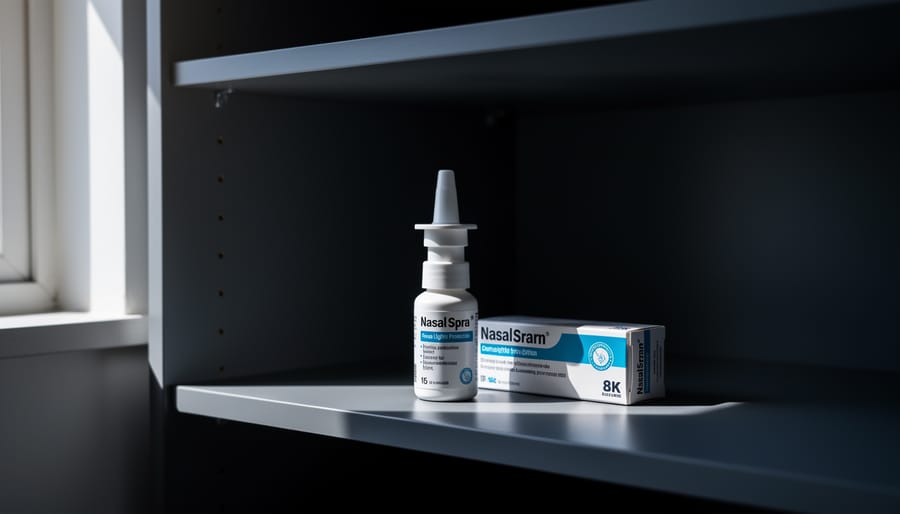
Before you carve out a storage spot, gather a few basics. Nothing fancy, and most of it is already hiding in your kitchen drawer. Think of it as mise en place for your spray: a little prep now saves headaches later.
- Original box and label: they hold the storage directions, lot number and expiry, so keep them with the bottle.
- Fridge-safe container or small opaque pouch: blocks light and keeps the bottle from rolling around.
- A dedicated fridge shelf, not the door: the door swings through temperature changes every time you grab the milk.
- Small fridge thermometer: lets you confirm the shelf is actually as cold as the label asks.
- Permanent marker and labels: for writing the date you first opened it.
- Clean tissues or alcohol wipes: to wipe the outside of the nozzle without soaking the tip.
- Insulated travel case with a cold pack: keeps things steady on the metro, in a bag or on a trip.
One insider tip: grab the thermometer first. Plenty of Montreal apartment fridges run colder at the back and warmer near the front, and an old fridge in a heat wave can surprise you. Once you’ve got these items lined up, you’re set to choose your spot and start the steps below.
Stop Signs and Safety Warnings Before You Handle Your Spray
Before you touch the cap, give your spray a quick once-over. Some things are non-negotiable: if you spot any of the following, stop and check with a pharmacist or healthcare professional instead of using it.
– Cloudiness, floating particles or any color change in the liquid
– A weird or off smell
– A cracked, clogged, damaged or leaking nozzle
– A broken tamper seal or a bottle that looks like it’s been opened
– A missing label, or no clue where it came from
– An expired date, or one past the beyond-use date on the label
– A bottle that froze, or one that spent time in a hot car or in direct sun
That last one trips people up in Montreal. A bottle forgotten on the dashboard during a July scorcher, or left in a bag during a -20°C stretch, has been through more than it was made for, even if it looks fine afterward.
A few handling rules stay fixed no matter what. Never share a nasal spray, even with someone you live with. Never top it up or dilute it, since that changes the formulation and invites contamination. Keep it well out of reach of kids and pets.
One more thing worth saying plainly: unlabeled or gray-market products carry extra uncertainty about what’s actually in the bottle. If you can’t confirm the source or contents, treat that as a reason to pause and ask a professional.
How to Store Semax Nasal Spray, Step by Step
Here’s the routine, start to finish. The golden rule: whatever the manufacturer’s label says about storage temperature overrides everything below, so read it before you do anything else.
- Inspect the package the moment it lands. Check that the tamper seal is intact, the label is readable, and the nozzle isn’t cracked or leaking. If anything looks off, don’t use it and call your pharmacist or supplier.
- Read the storage instructions on the label or insert. Note the stated temperature range and any “refrigerate” or “protect from light” line, since your next move depends on it.
- Pick the right spot. If the label says refrigerate, use a back shelf of the fridge, never the door and never against the freezer wall where it can freeze. If it allows room temperature, choose a cool, dark cupboard away from windows, stoves and radiators.
- Keep it in its original box or an opaque pouch so light can’t get at it, and stand the bottle upright with the cap firmly on.
- Write the date you first opened it on the label with a permanent marker. Future you will be grateful.
- After each use, wipe the outside of the nozzle with a clean tissue, recap it right away, and put it straight back in its spot.
Montreal weather loves to mess with this routine. During a July heat wave, a cupboard in a top-floor walk-up can turn into an oven, so the fridge may be the safer bet if the label permits it. Don’t leave the bottle in a bag on a patio table either, and when you’re planning picnic days keep it home or in an insulated pouch rather than baking in the sun. Heading out for local errands? Don’t let the bottle ride around in a hot car.
Winter has its own traps. When the radiator is cranked in January, a shelf above or beside it gets surprisingly warm, so pick a spot a few feet away. And if you’re packing an on-the-go routine for your bag, a coat pocket during a -20°C commute is no place for it, since freezing can ruin a solution. The same goes for those weekend getaways so pack it with care. If it ever freezes or overheats, treat it as compromised and ask a pharmacist before using it again.
Handling Tips for Everyday Use and Life on the Move
Day-to-Day Handling at Home
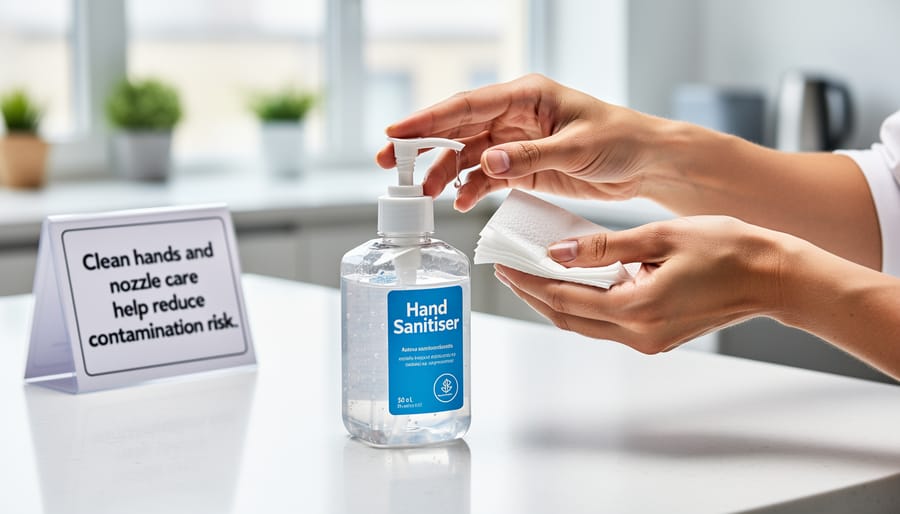
Think of your Semax spray like a good chef’s knife: it works best when you treat it the same way every time. Wash your hands before you touch the bottle, and keep it strictly yours. Sharing a nasal spray is a hard no, because it passes bacteria around fast.
After each use, wipe the outside of the nozzle with a clean tissue or alcohol wipe, then cap it right away. No dangling it on the counter while you hunt for your keys. Keep it upright, and don’t let the tip touch your nostril skin more than needed.
For the “where do I put this?” problem, pick one spot that matches your label’s storage directions and stick to it. Next to your toothbrush or beside your morning coffee works because you’ll actually see it. Habit beats willpower every time.
Travel, Commutes and Extreme Weather

Montreal weather doesn’t play fair, and neither does a hot metro car in August. Keep your spray in a small insulated pouch, and add a cold pack only if the label calls for refrigeration. Wrap the pack in a cloth so it never touches the bottle directly, since a frozen spray goes in the stop-using pile.
On cold snaps, don’t leave it in your coat pocket on a -20°C walk. Tuck it in an inside pocket close to your body, then bring it back to a cool, dark spot the second you’re indoors.
Flying? Carry it on, never checked. Checked bags can swing hot or freezing in the hold. Keep it in the original packaging so security can see the label, and look up the local rules at your destination, since Semax’s status differs from country to country. Never park it in a hot car or a sunny patio bag.
How to Check Your Spray Is Still Good and What to Do Next
Before every spray, take ten seconds for a quick once-over. Hold the bottle up to the light: the liquid should look clear, with the same color you saw on day one. No cloudiness, no floating bits, no new tint. Give it a gentle sniff near the nozzle; anything odd or sour is a red flag. Then check the nozzle: it should be clean, undamaged, and spray in a fine, even mist. If it dribbles, sputters, or clogs, don’t push your luck.
Next, do a quick mental audit. Is it within its expiry and any opened-by date you wrote down? Has it stayed where the label says it belongs, or did it spend a sweaty afternoon in a gym bag or a parked car? If you can’t vouch for its storage history, treat that as a warning on its own.
If a bottle fails any check, set it aside and don’t use it. Reach out to your pharmacist or the supplier, and bring the packaging if you have it. Don’t pour it down the drain; ask a pharmacy about their take-back program for safe disposal. And if you have storage questions or notice unexpected effects after use, talk to a healthcare professional.
Storage Questions People Keep Asking
Here’s the quick-fire round. Every answer below leans on one rule: your product’s label comes first, and a pharmacist can settle anything the label doesn’t.
Can I keep it at room temperature?
Only if your label says so. Some formulations tolerate a cool, dark cupboard, others want the fridge, so check the packaging or ask your pharmacist before you assume.
What if it froze, or sat in a hot car?
Treat it as compromised and don’t use it. Freezing or heat can change a peptide solution in ways you can’t see, so ask a pharmacist what to do next.
How long does an opened bottle last?
That depends on the formulation, so look for a beyond-use date on the label or leaflet. If there isn’t one, don’t guess; ask your pharmacist, and write your opened date on the bottle either way.
Can I travel with it?
Usually yes, in your carry-on, in its original packaging, ideally in an insulated pouch if the label calls for cool storage. Check local rules at your destination, since Semax’s status differs from country to country.
Can I move it into another container?
Better not to. Decanting raises the risk of contamination and removes the label info you need, so keep it in the original bottle.
How do I get rid of a bottle I don’t trust?
Skip the drain and the trash. A pharmacy take-back program is the safest route, and the staff can tell you what’s accepted locally.
Still unsure about something that isn’t covered here? A quick chat with your pharmacist beats any generic advice, and it’s free. Think of it like asking the fromager at the Jean-Talon Market how to keep your cheese: the person who knows the product gives the best answer.
So that’s the whole routine, and it’s easier than a January commute in a snowbank. Keep it cool, keep it dark, keep it capped, write the date on it, and give it a quick once-over before every use. Do those five things and you’ll dodge most of the problems we covered.
Stash it somewhere sensible, whether that’s the back of the fridge shelf or a cool, shaded cupboard away from the radiator, and take it along in an insulated pouch when you head out. When the label says one thing and this guide says another, the label wins. And if something looks off, or you’re just not sure, ask your pharmacist or healthcare professional. Bonne chance, and take care of your stuff!