

Join r/digitalnomad on Reddit before touching down in Montreal—the subreddit’s 1.5 million members share real-time visa workarounds, coworking space reviews, and cost-of-living breakdowns that beat any travel blog. Search “Montreal” in the community to uncover threads about navigating Quebec’s French-language work requirements, the best neighborhoods for short-term furnished rentals (Plateau and Mile End dominate discussions), and which cafés tolerate laptop warriors past the two-hour mark.
Montreal punches above its weight in the digital nomad ecosystem. You get European charm at North American internet speeds, a cost of living roughly 40% lower than Toronto or New York, and a creative energy that keeps remote workers from feeling isolated in their Airbnbs. The city’s bilingual reality means you’ll overhear strategy calls in three languages at Crew Collective, while Old Montreal’s cobblestone streets provide Instagram-worthy lunch breaks between Zoom meetings.
The r/digitalnomad community proves particularly valuable here because Montreal occupies this weird gray zone—it’s not officially set up for nomad visas like Portugal or Mexico, but thousands make it work through tourist stays, working holiday permits, or the startup visa program. Redditors break down these pathways with refreshing honesty, sharing what actually worked versus what immigration lawyers promise. They’ll tell you which neighborhoods have the fiber internet your video editing demands, where to find decent pho after 10 PM, and why winter here either makes or breaks your nomad experience.
The New Digital Nomad Reality in Montreal
Forget the Instagram fantasy of typing away on a pristine beach with a coconut nearby. Being a digital nomad in Montreal? That’s a whole different vibe—think espresso steam fogging your laptop at a Mile End café while snow blankets the cobblestones outside, or coding on a sunny Plateau terrace with the sound of French and English conversations swirling around you.
Montreal has quietly become a magnet for remote workers who want the digital nomad lifestyle without sacrificing urban culture or draining their bank accounts. Unlike Toronto’s eye-watering rent or Vancouver’s cost-of-living crisis, Montreal offers something increasingly rare: affordability that doesn’t compromise on quality of life. You can actually afford to live in vibrant neighborhoods like Verdun, Rosemont, or Mile End while still having cash left over for 5 à 7 drinks and weekend brunches.
The bilingual reality here adds its own flavor to the nomad experience. You’ll overhear Zoom calls switching seamlessly between languages, and that cultural duality creates an international atmosphere without needing a passport. It’s perfect for remote workers who crave cosmopolitan energy but appreciate European-style café culture and walkable streets.
Then there’s the four-season thing. Yeah, winter is real—like, really real—but that’s part of the deal. Smart nomads embrace it: coworking spaces become community hubs during February’s deep freeze, and there’s something oddly satisfying about finishing a deadline while watching a snowstorm from a heated café. Come summer, the city explodes with festivals, terrasses packed until midnight, and that electric energy that makes you understand why people choose to stay.
The r/digitalnomad community has caught on, with threads increasingly featuring Montreal as a underrated gem for remote work. The city offers what many nomads eventually crave: stability, culture, and community, without the sterile expat bubble you’ll find in Bali or Lisbon.
Digital Platforms Keeping Nomads Connected
Coworking Networks and Booking Apps
Gone are the days of scrambling for Wi-Fi passwords and outlets at yet another café. Montreal’s coworking scene has leveled up with apps and networks that make booking a desk as easy as ordering poutine on Uber Eats.
WeWork operates multiple locations across the city—think Old Montreal and Quartier des spectacles—and their app lets you book drop-in access, meeting rooms, or even lock down a dedicated desk for the month. Perfect when you need that professional backdrop for client calls without committing to a full lease.
For something more flexible, platforms like Breather let you reserve private workspaces by the hour. Need to escape your noisy Plateau apartment for an afternoon? Book a quiet room near Mont-Royal metro and get stuff done. The app shows real-time availability and instant booking—no phone calls, no hassle.
Local players are worth checking out too. Many Montreal coworking spaces like Crew Collective and Station Ho.st offer their own booking systems and day passes through their websites. Pro tip: some spots offer discounted rates if you book in French—embrace the bilingual advantage. Download a few apps, compare prices, and you’ll always have a workspace in your pocket, whether you’re in Mile End or the Quartier Latin.
Community Hubs and Online Meetups
The r/digitalnomad subreddit buzzes with Montreal-specific threads where remote workers swap intel on everything from coworking day passes to apartment hunting hacks. But the real magic happens in the city’s local Facebook groups like “Digital Nomads Montreal” and “Remote Workers MTL,” where bilingual conversations flow naturally between English and French—”Je cherche un café avec bon wifi près du Plateau” sits right next to requests for tax accountant recommendations.
These online hubs become lifelines when you’re navigating Montreal’s quirks, like understanding Quebec’s particular work permit requirements or finding out which metro stations have the most reliable connectivity. Members organize weekly meetups at spots in Mile End or organize spontaneous lunch gatherings when someone posts “Who’s free for poutine at La Banquise?”
Slack channels and Discord servers dedicated to Montreal’s remote work scene offer even more intimate networking. You’ll find channels for specific industries, language exchange partners, or just venting about Bell internet outages. The multilingual vibe means you can practice your French while scoring invitations to underground warehouse parties or pop-up markets. These digital spaces don’t just provide information—they transform solo nomads into a tight-knit crew who actually show up for each other, both online and IRL.
Physical Spaces Where Work Actually Gets Done
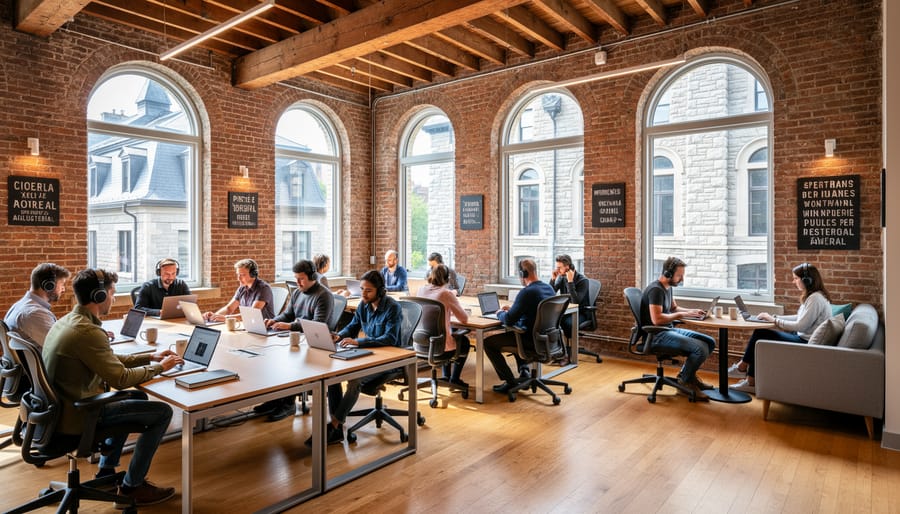
Coworking Spaces with Personality
Montreal’s coworking scene isn’t just about desks and WiFi—it’s where the city’s creative energy meets laptop hustle. These spots have serious personality, and you’ll find yourself actually wanting to work there (imagine that).
In Mile End, Crew Collective & Café operates out of a converted 1920s bank, and trust me, it’s as stunning as it sounds. Picture yourself typing under a gold-leaf ceiling with massive marble pillars around you. The café vibes mean you can grab a cortado without leaving your flow state, and the crowd skews creative—think designers, writers, and startup folks who appreciate working in a space that looks like a movie set. Day passes run around 30 bucks, but honestly? The architecture alone is worth it.
Head south to Griffintown and you’ll hit Notman House, the OG of Montreal’s tech and startup scene. This Victorian mansion turned innovation hub feels more like a clubhouse than an office. Free community events happen constantly—from pitch nights to casual 5 à 7s where you’ll actually make friends, not just swap LinkedIn profiles. The mix of francophones and anglophones creates that quintessentially Montreal bilingual buzz.
For Plateau vibes, Station C blends industrial-chic design with a seriously welcoming community. Large windows flood the brick-and-beam space with natural light, and the kitchen area becomes an unofficial networking zone around lunch. Monthly memberships include everything from coffee to beer on tap (oui, beer), plus they host regular workshops that’ll level up your remote work game.
These aren’t just places to park your laptop—they’re where Montreal’s digital nomad community actually lives.
Hybrid Cafés and Cultural Venues
Montreal’s café scene has evolved way beyond espresso bars—these are full-blown workspaces disguised as cultural hangouts. The r/digitalnomad community has flagged several spots where you can actually camp out with your laptop without getting the side-eye after hour two.
Café Névé in Mile End remains a nomad favorite for good reason. The WiFi’s solid, outlets are plentiful, and the vibe stays chill even during peak hours. Insider tip: grab a spot before 10am or roll in after 2pm when the brunch crowd clears out. Their cortados are perfection, and the natural light situation is chef’s kiss for those Zoom calls where you need to look alive.
Over in the Plateau, Dispatch Coffee hits different. This place gets the assignment—high communal tables, proper barista-level coffee, and a no-judgment policy on lingering. The staff are genuinely cool with remote workers setting up shop, especially on weekdays. Just buy a drink every couple hours and you’re golden.
For a more cultural twist, check out Espace La Fontaine during off-peak hours. This gallery-café hybrid hosts rotating art exhibitions while serving killer sandwiches and locally roasted coffee. The WiFi’s reliable, and you’re literally working surrounded by Montreal’s creative energy. Wednesday afternoons are quietest if you need to focus, but Thursday evenings bring an artsy crowd that’s perfect for organic networking.
Pro move: download the Spacefinder Montreal app—it crowdsources real-time info on café crowding and WiFi quality from the local nomad community. Très pratique.
The Food and Fuel Factor
Delivery Apps That Actually Work Here
When you’re deep in a coding sprint or on your third video call of the day, the last thing you want is to abandon your perfectly heated café seat to hunt for lunch. Montreal’s delivery game is solid, and digital nomads here have it down to a science.
Uber Eats dominates the scene with the widest restaurant selection—everything from poutine classics to Vietnamese banh mi arrives surprisingly fast, even in winter. The app’s interface works seamlessly whether you’re navigating in English or French, which matters more than you’d think when hunger strikes mid-deadline. DoorDash runs a close second, often featuring better promos for Mile End and Plateau restaurants that nomads frequent.
Here’s the insider move: combine Skip the Dishes for late-night orders (they partner with spots that stay open past 11 PM) and check out local platforms like Foodora alternatives that showcase independent restaurants the big apps miss. Many coworking spaces in Griffintown have informal delivery pools—someone’s always coordinating a group order to split fees.
Pro tip: save your go-to orders as favourites for one-tap reordering during crunch time. The delivery infrastructure here genuinely supports the “don’t break your flow” mentality that makes or breaks productive remote work days. Your 2 PM energy crash thanks you in advance.
Nomad-Friendly Restaurant Spots
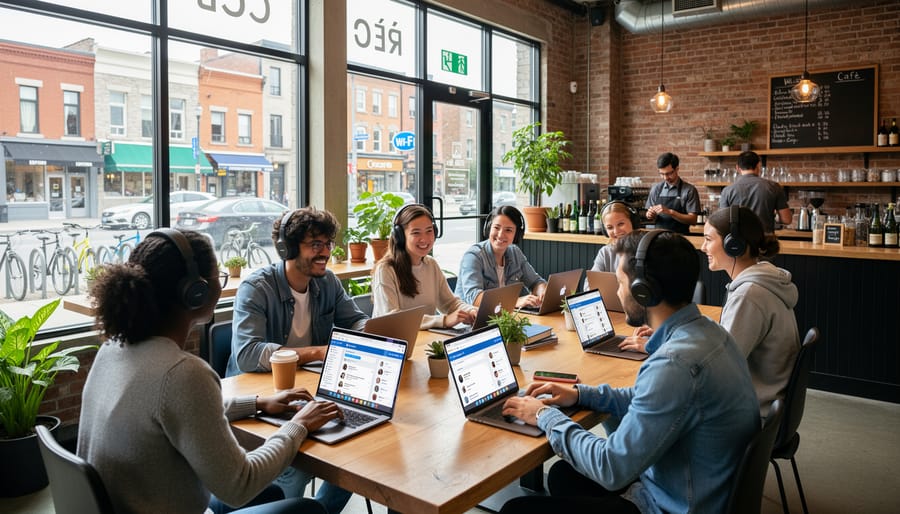
Montreal’s food scene doubles as a digital nomad’s office, and certain spots practically roll out the red carpet for laptop warriors. Tommy Café on Notre-Dame Est has become legendary among remote workers—think generous table space, lightning-fast WiFi, and baristas who won’t side-eye you for camping out with a single café au lait (though buying lunch earns you serious karma points). They’re open until 9 PM most days, giving you flexibility to dodge the morning rush.
Over in Mile End, Café Névé welcomes the work-from-anywhere crowd with open arms and ridiculously good pastries. The vibe’s chill, the outlets are plentiful, and you’ll definitely overhear conversations switching between English, French, and Spanish—c’est très Montréal. For a change of scenery, hit up Time Out Market in the Eaton Centre. Yeah, it’s a food hall, but the communal tables and extended hours (until 10 PM) make it ideal for splitting your day between client calls and sampling different vendors. Pro tip: grab a spot near the windows for natural light that’ll save your Zoom aesthetic. These spots get it—nomads need fuel, WiFi, and space to hustle without feeling rushed.
Building Real Connections in a Transient Lifestyle
Look, working remotely in Montreal doesn’t mean you’re sentenced to a life of solo coffee shop sessions and awkward laptop glances. The city’s digital nomad scene has evolved into something genuinely vibrant, where making connections feels less like networking and more like stumbling into your new crew.
The r/digitalnomad subreddit has become ground zero for Montreal newcomers, but the real magic happens when you transition from lurking online to showing up IRL. Monthly meetups at spots like Crew Collective or co-working spaces in Mile End regularly draw 30-plus remote workers ready to trade tips on everything from the best unlimited data plans to which terrasses are still tolerable in November.
What makes Montreal’s nomad community special is the bilingual twist. You’ll find yourself bouncing between English networking events at Station Ho.st and French-language apéros organized through Facebook groups like “Nomades Numériques MTL.” Even if your français is rusty, locals appreciate the effort, and honestly, the language barrier melts away over shared complaints about winter or debates about the superior bagel shop.
The cultural calendar helps too. Summer brings Piknic Électronik where half the crowd seems to be on their laptops before the DJ sets start. First Fridays in the Plateau turn into spontaneous networking sessions. Even tam-tams on Mont-Royal become unofficial meetup spots where someone inevitably has a Slack channel invite ready.
The secret sauce? Montreal nomads genuinely want you here. Unlike cities where remote workers guard their favourite spots like state secrets, locals here will text you their wifi passwords and invite you to their potluck. The transient lifestyle stops feeling quite so temporary when you’ve got standing Wednesday plans at someone’s Mile End apartment.
Practical Insider Tips for Nomading in Montreal
Ready to actually live here for a minute? Let’s get tactical about making Montreal work for your nomad lifestyle without burning through your savings or freezing your butt off.
Neighborhood-wise, Mile End and Plateau-Mont-Royal are the classic digital nomad zones—creative vibes, cafés everywhere, walkable AF. Expect to drop $1,200-$1,800 monthly for a decent studio. If you’re watching your wallet, check out Hochelaga-Maisonneuve or Verdun. They’re grittier but authentically Montreal, with rents closer to $800-$1,200. For the boujee crowd who wants English comfort, NDG and Westmount deliver but you’ll pay premium prices.
The STM transit system is your new best friend. Grab an OPUS card immediately—$94 monthly gets you unlimited metro and bus access. Download the Transit app; it’s honestly better than Google Maps here. Pro tip: the metro shuts down around 12:30 AM weeknights, 1 AM weekends, so plan accordingly or make peace with BIXI bikes and taxis.
Winter survival isn’t a joke, mes amis. November through March means serious cold. Invest in proper boots (Sorel or Kamik), a Canada Goose-level parka, and thermal layers. The underground city (RÉSO) connects 32 kilometers of tunnels with shops and metro stations—learn to navigate it and you’ll barely see daylight January through February. Vitamin D supplements become essential.
Tax-wise, Quebec’s system is complicated. If you’re earning remotely for foreign clients while physically here, you might technically owe provincial taxes after 183 days. Consult a cross-border accountant before you hit six months. Sites like TurboTax don’t cut it for Quebec’s unique tax situation.
Seasonal strategy: September to November is peak nomad season—festivals winding down, summer crowds gone, weather still decent. Avoid January and February unless you’re genuinely into winter sports. May through June offers perfect weather before tourist chaos hits.
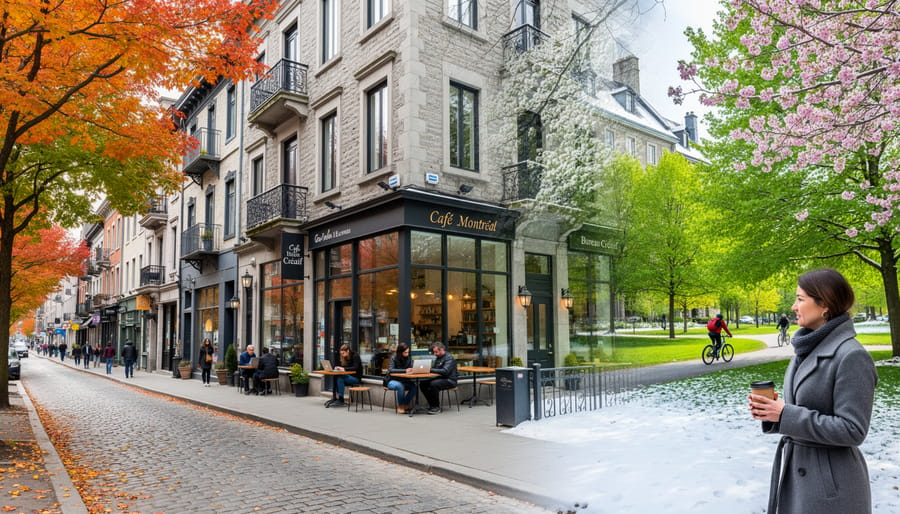
Here’s the thing about Montreal that keeps digital nomads coming back, saison après saison: it’s not just about finding another café with decent wifi. This city has mastered something that most North American destinations are still figuring out—the art of blending serious digital infrastructure with genuine human connection. You get fiber-optic speeds and coworking spaces that actually foster community, not just transactional desk rentals.
What makes Montreal a total power move for remote workers is that European café culture vibe without the Schengen visa stress. You can literally grab a croissant at a Parisian-style boulangerie, work from a spot where French flows around you like background music, then head to a coworking happy hour where everyone’s swapping Discord handles and side project ideas. The r/digitalnomad crowd has caught on—Montreal delivers that international experience right in your North American time zone.
The real magic happens when you stop treating this city like a checklist and start living it. Join that random potluck at a Mile End coworking space. Strike up conversations over bagels. Let Montreal’s rhythm reshape your remote work routine instead of forcing your old patterns onto new geography. The infrastructure brings you here—the 5-à-7s, the spontaneous collaborations, the late-night poutine debates—that’s what makes you stay.
So close your laptop, step outside, and see what happens. Montreal’s waiting, and trust us, your Zoom background is about to get way more interesting.


+ There are no comments
Add yours