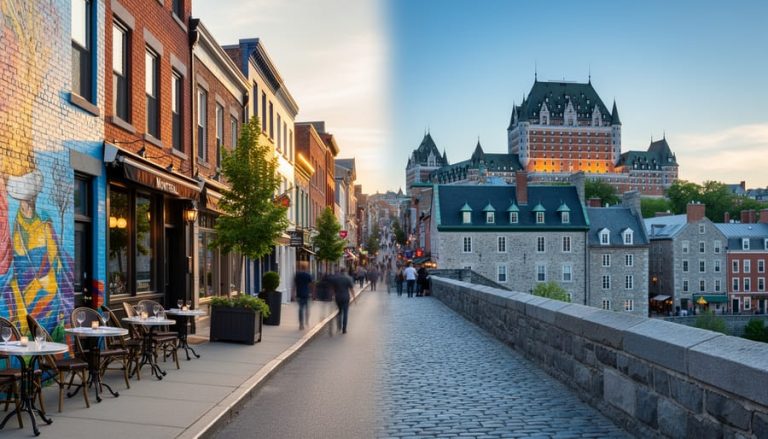
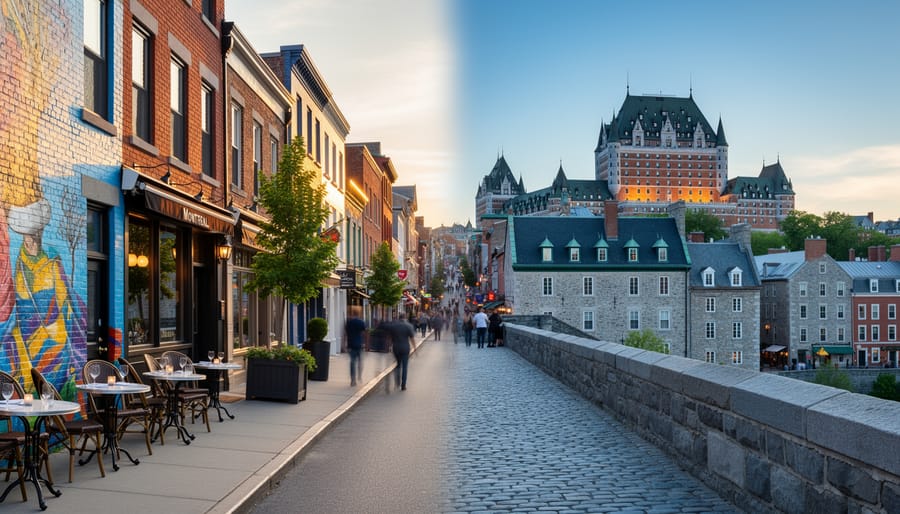
Montreal and Quebec City are two completely different hits of the same French-speaking province, and you really should do both. Montreal is the big, loud, late-night city: bagels at 2 a.m., murals on every alley wall, festivals that spill into the streets. Quebec City is the storybook one: stone ramparts, cobbled lanes, and a skyline crowned by the Château Frontenac, all packed into a walkable old town you can cover on foot in a day. Think of Montreal as the party and Quebec City as the postcard.
The good news is that they sit about 250 kilometres apart, so the trip between them is easy. Most people take the train, bus, or car, and you can bounce from one to the other in roughly three hours. That means a long weekend works, though a week lets you actually breathe.
Below, you’ll find seven picks (four in Montreal, three in Quebec City), a quick comparison table, a no-stress itinerary, and the logistics that save you money and time. Plus a few insider tips we’d normally only share over a poutine. Bonne route!
Two Cities, One Province: Why Quebec City and Montreal Belong on the Same Trip
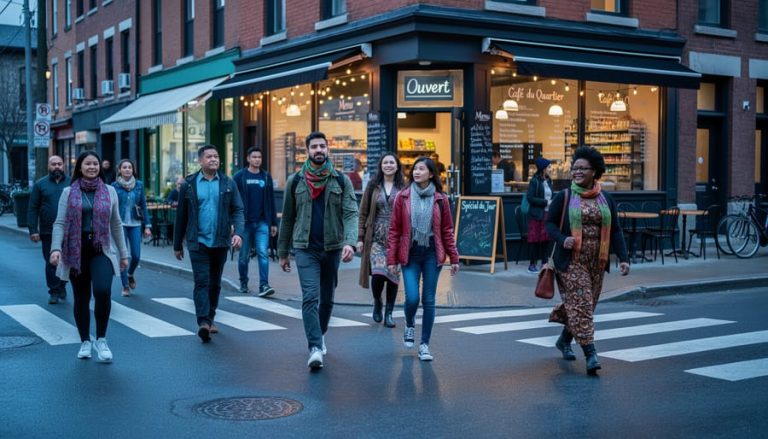
Montreal and Quebec City share a province, a language, and a love of a good meal, but they feel like two entirely different trips. Montreal is the big, creative, food-obsessed metropolis, where bagel shops, jazz clubs, and street murals all compete for your attention. If you want to understand why the city buzzes the way it does, start with Montreal culture a mix of languages, cuisines, and creative energy you can feel on almost every block.
Quebec City is the quieter sibling, and it wears that proudly. It’s compact, walkable, and wrapped in historic stone walls, with cobbled lanes that feel closer to a French provincial town than to anywhere else in North America. You can cross the old core on foot in an afternoon and still want to linger over another café au lait.
What ties them together is French. Whether you hear it at a Montreal market stall or from a Quebec City bistro server, it shapes the food, the humour, the festivals, and the pace of daily life. A cheerful “bonjour” goes a long way in both places.
Each city suits a different kind of traveller. Weekend food crawlers and neighbourhood hoppers will love Montreal. History buffs and romantics will fall for Quebec City’s walled streets and river views.
How We Chose the picks in this guide: we looked for walkability, strong local character, real food and culture value, and ease of access, so every stop can be reached without a complicated plan.
Pair them, and you get the energy of a big city and the romance of an old-world one in a single journey.
Where to Go: Top Areas and Picks in Montreal and Quebec City
1. Old Montreal (Vieux-Montréal)
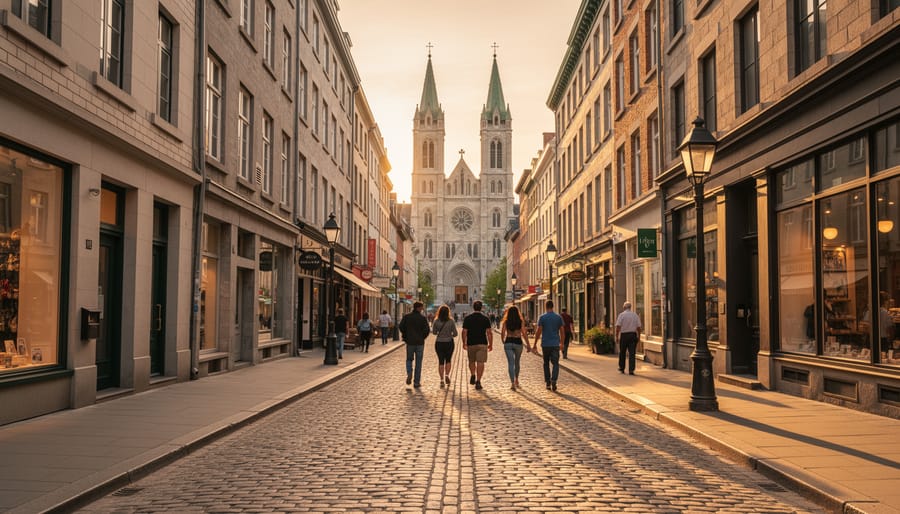
Step onto the cobblestones of Vieux-Montréal and the modern city seems to melt away. This is the oldest part of town, where stone buildings lean over narrow streets and horse-drawn carriages clop past boutique hotels. If you’re based in Montreal and craving a taste of Quebec City’s old-world charm, this is your closest fix, no train ticket required.
Start at Place d’Armes, where the Notre-Dame Basilica stands guard. Its deep-blue, star-speckled interior is jaw-dropping, so step inside even if you’re not usually a church person. From there, drift down toward the Old Port for a stroll along the water, with the St. Lawrence stretching out and the skyline glowing behind you.
Golden hour is the magic window. The sun hits the limestone facades just right, the lanterns flicker on, and the terrasses fill with that easy, clinking-glasses buzz. Duck into a candlelit bistro for a plate of something rich and French-leaning, or find a low-key bar tucked in a vaulted cellar. Bon appétit, and take your time. This neighbourhood rewards wandering.
2. Plateau Mont-Royal and Mile End
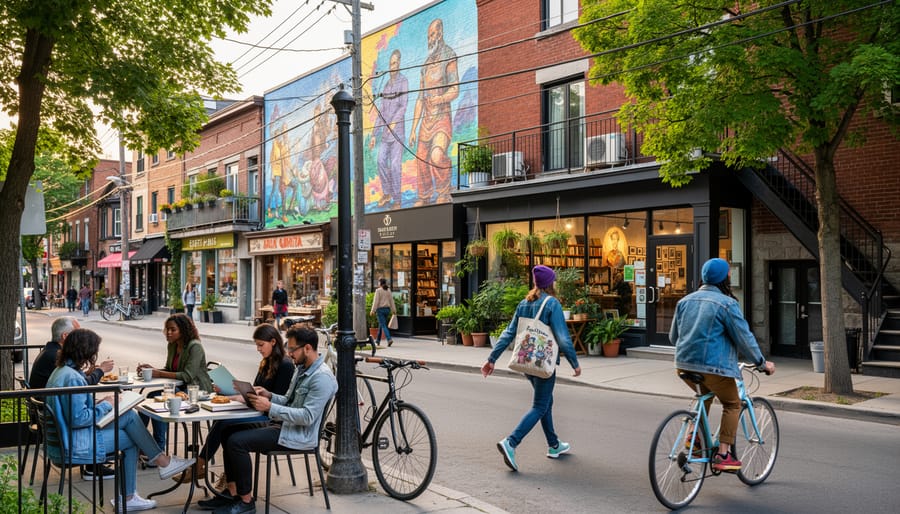
Picture a Saturday morning on the Plateau: wrought-iron spiral staircases climbing the brick facades, kids on scooters, and someone’s dog tied up outside a café that smells like fresh espresso. This is Montreal at its most lived-in, and it’s a perfect counterpoint to Quebec City’s postcard-perfect Old Town.
Start with a wander. The side streets are a gallery in themselves, with murals tucked down laneways and indie boutiques selling vintage finds, local ceramics, and zines. Ruelles vertes (green alleys) offer a peek at how neighbours turn back lanes into little gardens.
Then there’s the great bagel debate. Mile End is home to two famous wood-fired bakeries, and locals will defend their favourite with real passion. Grab a warm, slightly sweet, honey-boiled bagel from each and decide for yourself.
Come evening, the area hums with live music, from tiny bars to indie venues. Just follow the sound, and don’t be shy about a “salut!” to the folks next to you.
3. Mount Royal Park and Its Lookout
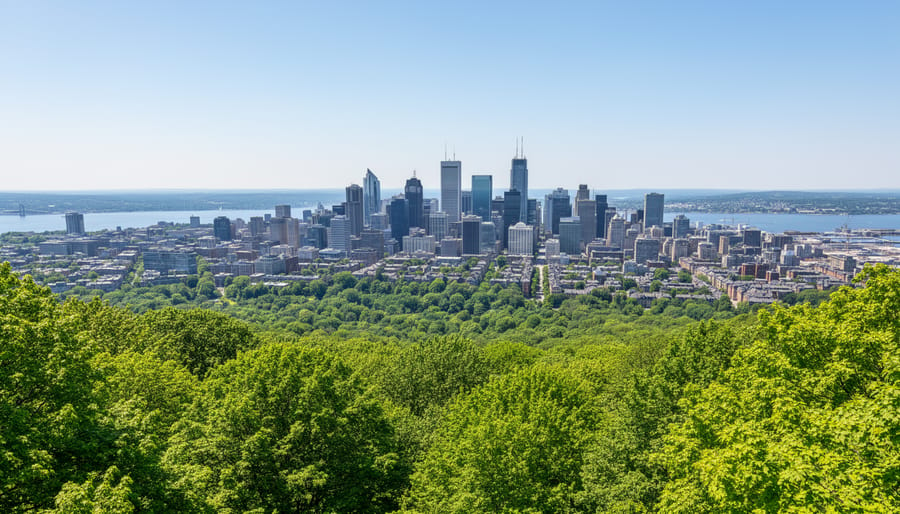
If Montreal has a living room, this is it. Mount Royal Park (Parc du Mont-Royal) sits right in the middle of the island, and locals treat it like a shared backyard. Hike or stroll up through the trees, and you’ll end up at the Kondiaronk Belvedere, where the whole downtown skyline spreads out below you with the St. Lawrence glinting behind it. Come around sunset if you can; the glass towers go gold and everyone seems to go quiet for a minute.
Pack a picnic from a nearby bakery or market and claim a patch of grass. On sunny weekends, the park fills with friends, drummers, dog walkers, and families, all doing their own thing. It’s not a staged attraction, just Montreal being itself.
Seasons change the vibe completely. Summer is for lounging and lookout photos, autumn brings serious colour, and winter turns the paths into snowshoe and cross-country ski routes. Wear real shoes, because the climb is gentler than a mountain but still a climb.
4. Jean-Talon Market and Little Italy
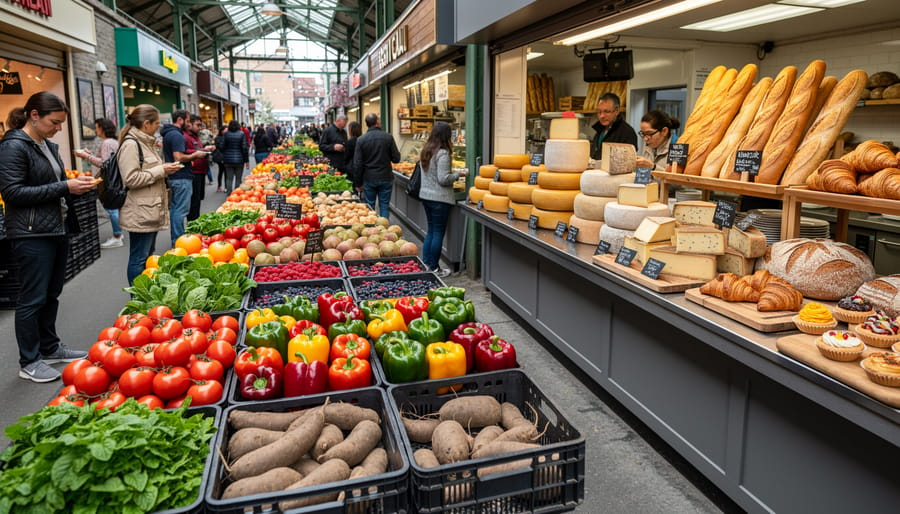
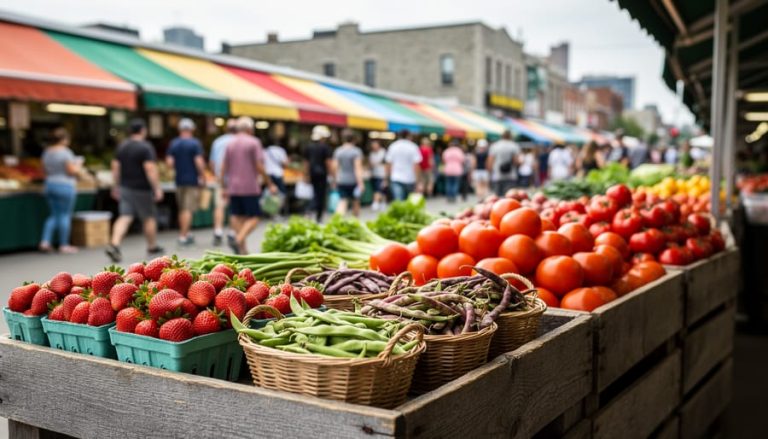
Jean-Talon Market is where Montreal eats like it means it. Wander the stalls and you’ll find just-picked produce, local cheeses, maple everything, and street snacks you can nibble as you go. The smartest move here is to graze. Grab a few bites from different vendors, share them on a bench, and let your appetite lead the way. If you want to dig deeper into the scene, our rundown of the Montreal food markets covers more spots worth your time.
Right next door, Little Italy brings espresso bars, pastry counters, and old-school trattorias into the mix. Stop for a strong cafè, a slice of something sweet, or a plate of fresh pasta, and you’ve got a full afternoon of eating. Bonne appétit, or as the neighbourhood might say, buon appetito.
Insider tip: go on a weekday morning, when the aisles are calmer and vendors have more time to chat about what’s in season.
5. Old Quebec (Vieux-Québec) and the Fortified Walls
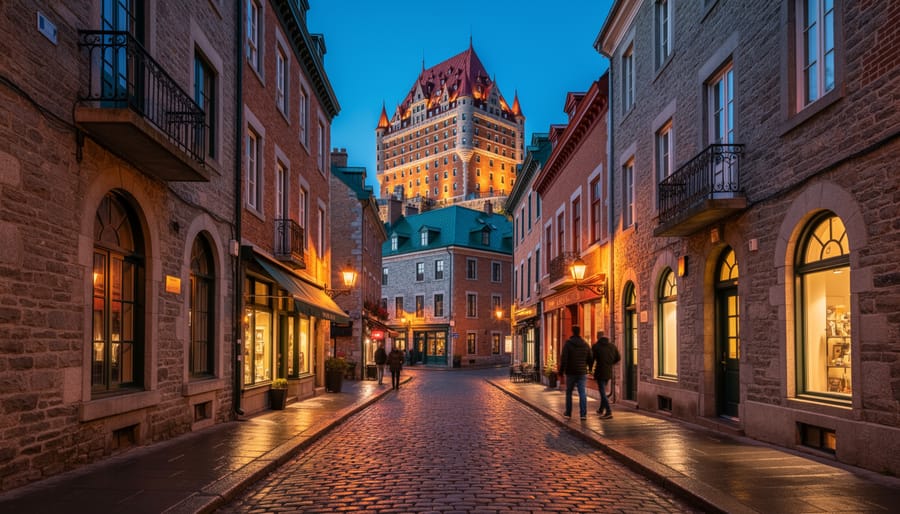
Step through Porte Saint-Louis and Old Quebec hits you like a postcard that decided to come to life. This is the historic heart of the city, a UNESCO World Heritage district where stone buildings, steep lanes, and copper rooftops make you swear you’ve been teleported across the Atlantic. Bienvenue to the only fortified city walls north of Mexico.
The district splits into two levels. Upper Town (Haute-Ville) sits on the cliff, anchored by the turreted Château Frontenac, probably the most photographed hotel in Canada. Wander past Place d’Armes, grab a coffee, and just follow the walls on foot. Lower Town (Basse-Ville) tucks along the river, where Place Royale feels like a tiny European square frozen in time, with its stone facades and cafés spilling onto the cobblestones.
Everything here is walkable, which is half the charm. Lace up comfy shoes, because those hills are real. Linger over a crêpe or a bowl of pea soup, and let yourself get delightfully lost between the ramparts and the river.
Insider tip: go early, before the tour groups arrive, and the streets feel like they belong to you.
6. Quartier Petit-Champlain and Dufferin Terrace
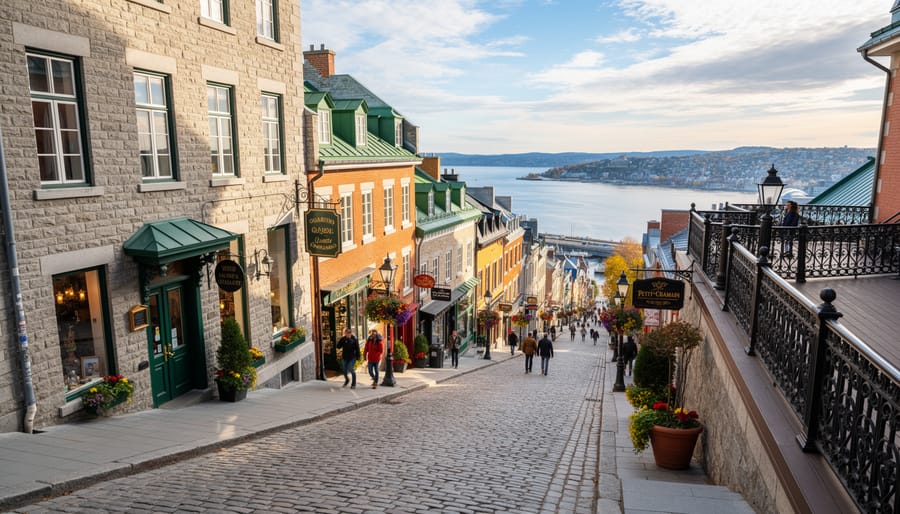
Step into Quartier Petit-Champlain and you’ll swear someone teleported you to a village in France. The lanes are narrow, the stone buildings lean in close, and every few steps there’s an artisan boutique selling handmade ceramics, wool sweaters, or small-batch maple treats. Duck into a bistro for a warm crêpe or a glass of wine, and let the afternoon slow down.
Don’t skip the murals tucked on building walls, especially the big trompe-l’œil painting that tells the neighbourhood’s history. It’s an easy photo stop and a fun conversation starter.
Once you’ve wandered the lower town, hop on the funicular to Dufferin Terrace. The short ride is a little touristy, sure, but it’s also a charming shortcut up the cliff. At the top, the wide boardwalk stretches beside the Château Frontenac, with sweeping views over the St. Lawrence River and the ferries gliding past below. Grab a coffee, find a bench, and soak it in. Sunset here is pure magic, très romantique.
7. Saint-Jean-Baptiste and Rue Saint-Jean (Quebec City’s Local Side)
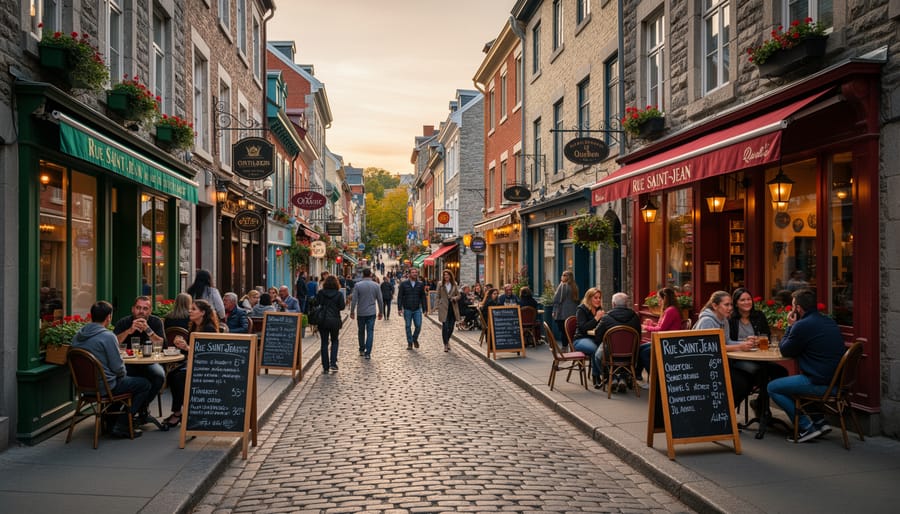
Once you’ve snapped your photos at Château Frontenac, head up Rue Saint-Jean and keep going past the old gate. This is where the postcard fades and everyday Quebec City shows up. Saint-Jean-Baptiste is the neighbourhood where locals actually live, which means fewer souvenir shops and more places with chalkboard menus, mismatched chairs, and a regulars’ crowd.
Think casual bistros, bakeries that sell out by noon, craft breweries, tiny wine bars, and secondhand shops tucked between apartments with those signature winding exterior staircases. It’s easy to graze your way down the street: a coffee here, a plate of something Québécois there, a pint to finish.
Go on a weekday evening or a lazy Saturday afternoon, when the neighbourhood hums at its most natural pace. Start with a cheerful “Bonjour!” at the door, and you’ll get a warmer welcome than most tourists expect. It’s the perfect counterpoint to Old Quebec’s polished charm, and honestly, it might be your favourite part of the trip.
Getting Between Cities and Planning Your Time: Practical Information
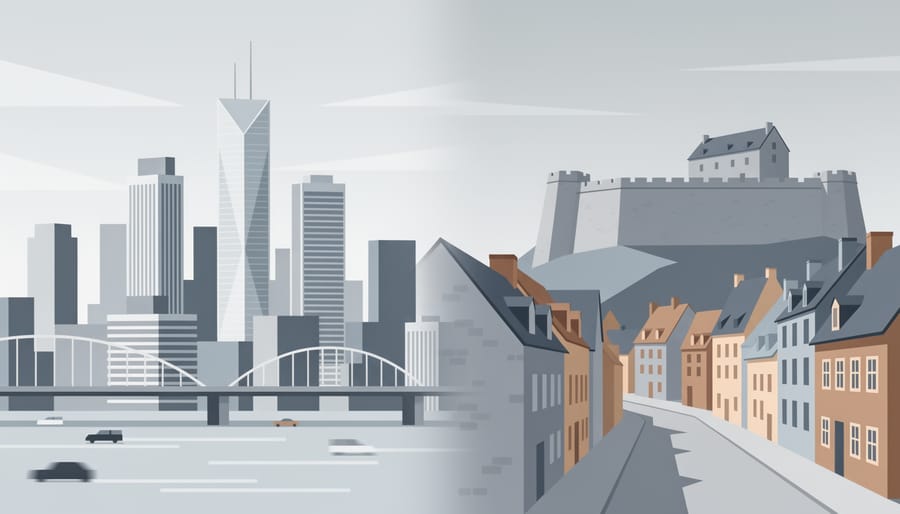
Getting from Montreal to Quebec City is easy, and you’ve got a few solid ways to do it. Most trips land somewhere around three to four hours door to door, depending on the route and traffic. Here’s the quick comparison:
| Option | Approx. travel time | Comfort & flexibility | Best for |
|---|---|---|---|
| Train | Roughly 3 to 3.5 hours | Relaxed, with space to move; fixed departure times | Scenic, stress-free travel |
| Bus | Roughly 3 to 3.5 hours | Simple and direct; set schedules | Budget-minded travellers |
| Car | Roughly 2.5 to 3 hours without stops | Maximum freedom; parking is tricky in old districts | Side trips and small towns |
| Rideshare/carpool | Similar to driving | Shared ride, less control over timing | Splitting the ride with others |
Always check the official operators for current fares and timetables before you lock anything in.
How many days? Give Montreal at least two to three days to hit the neighbourhoods above. Quebec City works well in one to two, since the historic core is compact.
Language basics: French is the everyday language, but you’ll hear English in most tourist spots. Opening with a friendly “Bonjour” goes a long way.
Seasons: Winters are cold and snowy, which suits skating and cozy cafés. Summers are warm and lively with terraces everywhere. Spring and fall are milder but can swing between chilly and mild. Even in the warmer months, if you’re craving some beach vibes Montreal has surprising spots to unwind by the water.
Getting around: Both cities are very walkable. In Montreal, the metro and buses cover the rest. In Quebec City, you can walk almost everything, though a bus helps with the hillier stretches.
Suggested Itineraries: Weekend and Longer Stays
Not sure how long you’ve got? Here’s a simple way to slice it. For a food-and-culture weekend in Montreal, spend Saturday wandering Old Montreal, then grazing through Jean-Talon Market and Little Italy. Sunday belongs to the Plateau and Mile End, ending with sunset from Mount Royal.
If you’ve got three or four days, the Montreal plus Quebec City combo works beautifully:
- Day 1: Old Montreal (pick 1) by day, then dinner and drinks around the Plateau (pick 2).
- Day 2: Jean-Talon Market and Little Italy (pick 4), then Mount Royal’s lookout (pick 3) for golden hour.
- Day 3: Head to Quebec City and wander Old Quebec and the fortified walls (pick 5), then Petit-Champlain and Dufferin Terrace (pick 6).
- Day 4: Eat and drink like a local on Rue Saint-Jean (pick 7) before heading home.
Pack a lunch on the Mount Royal day and you’ll want a few good picnic spots lined up, because grabbing cheese and bread at the market and eating with a view is peak Montreal. Keep each day to one or two main stops, leave gaps for wandering, and don’t be afraid to swap days around if the weather turns.
Insider Tips for Exploring Like a Local
Start every interaction with “Bonjour/Hi.” It’s the classic Montreal opener, and it tells people you’re happy to meet them on their turf, whichever language they pick next. Most locals switch easily, but that first bonjour buys real goodwill.
Dining etiquette is simple. Tip 15 to 20 percent at sit-down spots, and know that your server expects it. Servers will often ask “pour ici ou pour emporter?” (here or to go?), so have your answer ready. Want to dodge the queues at bakeries and brunch counters? Eat early, around 11 a.m. for lunch, or go after the rush in the mid-afternoon.
Then wander past the postcard blocks. The best finds are usually two or three streets off the main drag, where corner cafés buzz with regulars and laptops. You’ll spot plenty of digital nomads in those neighbourhood spots, which says a lot about the local scene.
Finally, remember these are lived-in neighbourhoods, not theme parks. Keep your voice down on residential staircases at night, don’t block doorways for photos, and say “excusez-moi” when you squeeze past. A little courtesy goes a long way in both cities.
Quebec City and Montreal FAQs
Is Quebec City worth visiting if you’re based in Montreal?
Absolutely. The two cities feel nothing alike, and Quebec City’s walled Old Town, river views, and compact, walkable layout give you a very different kind of trip without leaving the province.
Do you need to speak French?
No. English gets you by in most tourist areas of both cities, though a friendly “Bonjour” and a few French phrases go a long way, especially in Quebec City.
How many days do you need in each city?
Two to three days covers Montreal’s main neighbourhoods and food spots. Quebec City works well with one to two days, since the historic core is small enough to cover on foot.
Can you visit Quebec City as a day trip from Montreal?
It’s doable, but it makes for a long day with a lot of travel time. An overnight stay lets you catch the Old Town at golden hour and in the quiet of the morning.
Train or car? That mostly depends on how you like to travel. Rail gives you a relaxed ride with no parking headaches, while a car offers flexibility if you want to stop in small towns along the way. Check official operators for current schedules and fares before you book.
So here’s the thing: Quebec City and Montreal aren’t competing, they’re completing each other. One gives you the big, restless, creative energy of a metropolis that never quite sits still. The other hands you cobblestones, copper rooftops, and a slower, storybook rhythm. Together, they show you two very different sides of the same proud, French-speaking province.
If Montreal is your home base, treat it that way. Let it be the launchpad for the Montreal City Life Exploration you’ve been meaning to start, then hop the train east when you’re craving a little old-world magic. You don’t need a perfect plan, just a bit of curiosity.
So pick a neighbourhood, any neighbourhood. Grab a bagel, a poutine, or a flaky pastry from a corner boulangerie. Say “bonjour,” wander without a map, and see where the street takes you. À la prochaine, and bon voyage!